
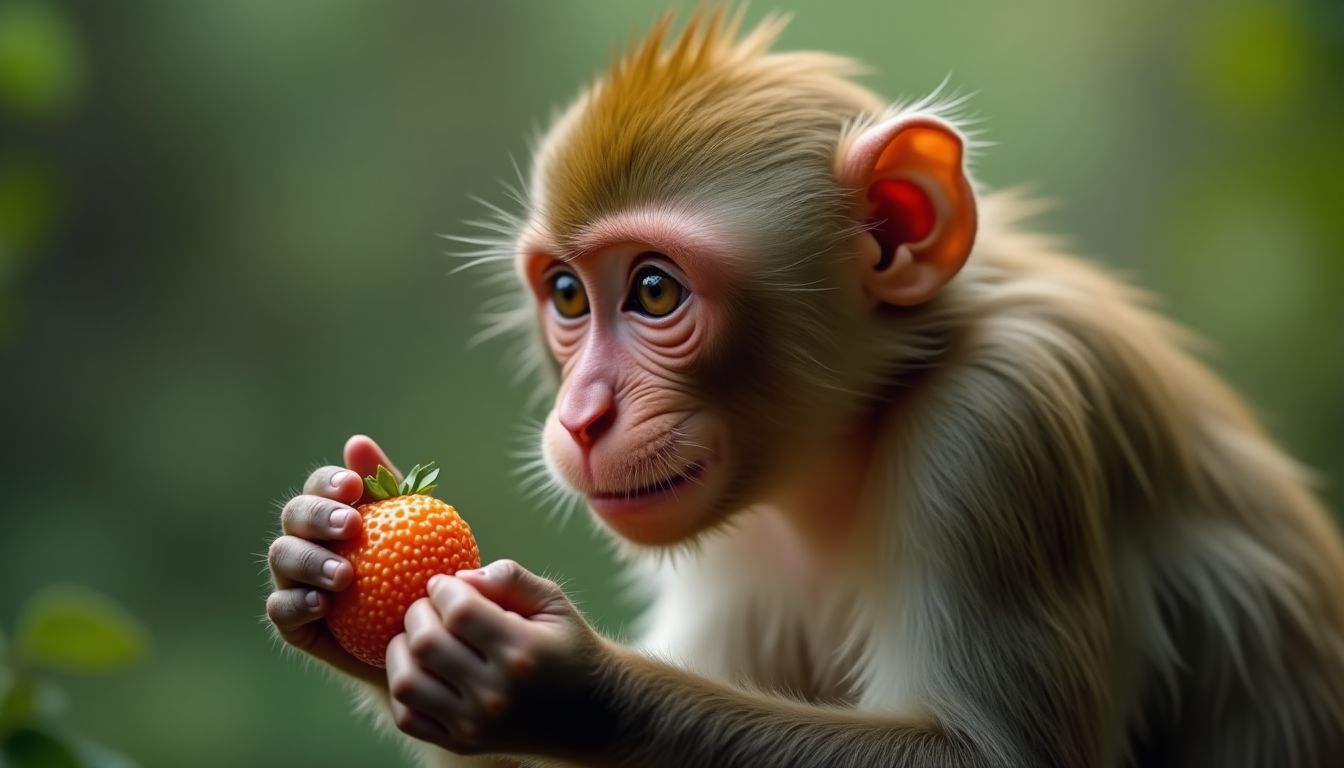
Picture this: a curious primate encounters one of Asia's most polarizing delicacies—the century egg—and proceeds to have what can only be described as the most relatable food experience ever captured on camera. The monkey's immediate, visceral disgust at this black, jelly-like preserved egg has struck a chord that transcends species, culture, and continents. It's a moment that perfectly captures something we've all experienced but rarely see reflected so purely: that instant, unfiltered reaction to food that just doesn't compute with our expectations.
Century eggs, also known as thousand-year-old eggs, represent one of humanity's most divisive culinary achievements. These duck, chicken, or quail eggs are preserved in clay, ash, salt, quicklime, and rice hulls for weeks or months until they develop their characteristic dark green or black color and cheese-like texture. For many East Asians, they're a beloved delicacy with a rich, complex flavor. For others—apparently including our primate cousins—they're an assault on everything food should be. The monkey's reaction validates every person who's ever politely nodded while secretly wondering how anyone could possibly enjoy such a thing.
What makes this moment so captivating is how it strips away all the cultural conditioning and social politeness we usually apply to food experiences. The monkey doesn't care about being culturally sensitive or appearing worldly—it just reacts with pure, honest revulsion. In our increasingly globalized world where we're constantly encouraged to be adventurous eaters and culturally open-minded, there's something refreshing about witnessing such an unguarded, authentic response. It's the reaction many of us have had internally but would never express outwardly.
The timing of this viral moment is particularly significant in our current cultural climate. We're living through an era of extreme food content—from bizarre TikTok recipes to competitive eating challenges to exotic food tourism. Yet here's a simple, genuine reaction that cuts through all the performative food culture and gets back to something fundamental: sometimes food just looks wrong, and that's okay. The monkey's disgust becomes a kind of permission slip for our own food preferences and boundaries.
There's also something deeply satisfying about seeing our evolutionary relatives react so similarly to how we might. It reinforces our connection to the natural world while simultaneously highlighting what makes us human—our ability to override those initial reactions in the name of culture, politeness, or culinary adventure. The monkey can't rationalize its way past the appearance and smell; it just nopes right out of there. Meanwhile, humans have developed entire cultural frameworks around foods that might initially trigger the same response.
This moment taps into our fascination with authenticity in an age of curated experiences. Unlike food influencers or travel show hosts who are paid to find something positive to say about every dish, the monkey offers brutally honest food criticism. It's refreshing in its simplicity and relatable in its humanity. We see ourselves in that moment of recoil, that universal "absolutely not" that transcends language and culture. The monkey becomes our spirit animal for every time we've encountered durian, fermented shark, or any other acquired taste that we simply couldn't acquire.