
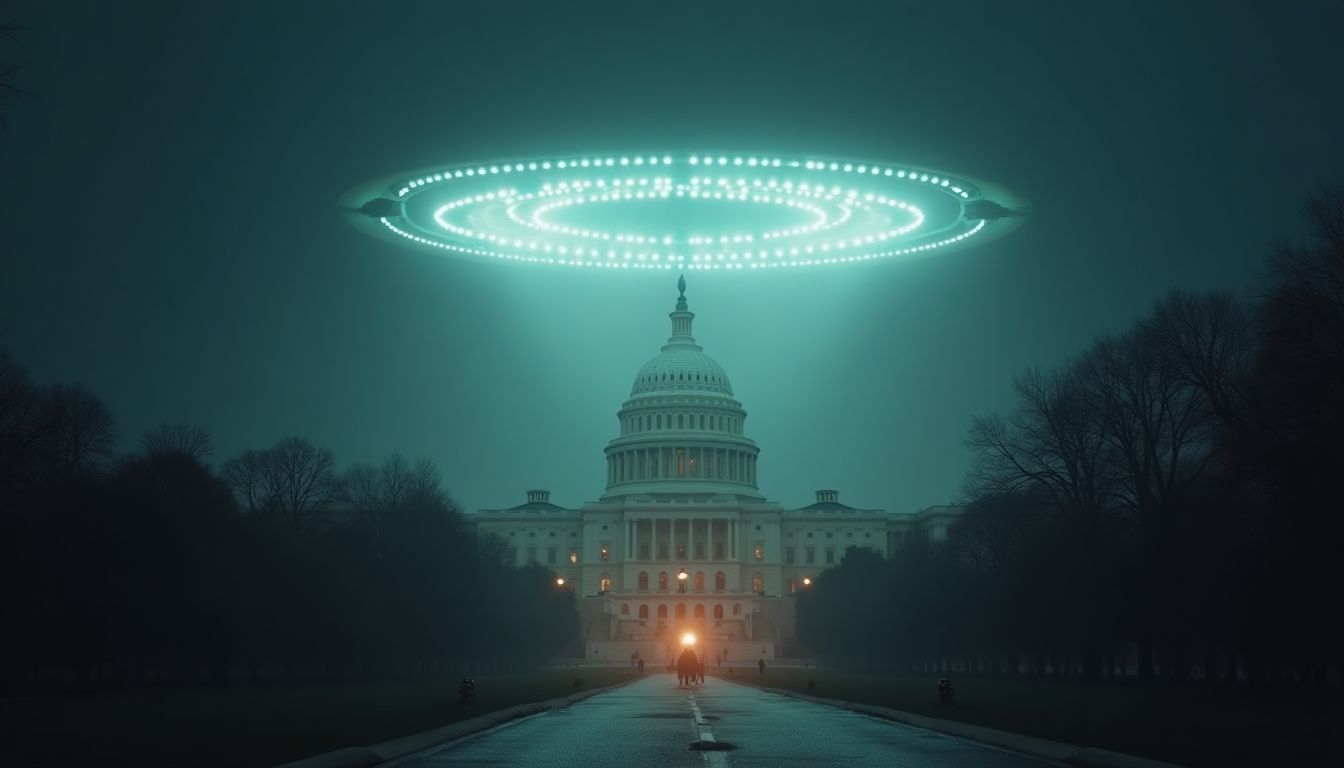
Picture this: The FBI finally opens their alien files vault, and instead of smoking guns and otherworldly revelations, we get what feels like the bureaucratic equivalent of a shrug. It's like ordering the secret menu at a mysterious restaurant only to receive a plain bologna sandwich. This moment perfectly captures our collective relationship with government transparency in 2024 – we're simultaneously desperate for answers and completely unsurprised when those answers feel underwhelming.
The timing couldn't be more perfect for this kind of cosmic letdown. We're living through an era where trust in institutions has hit rock bottom, yet our hunger for truth has never been stronger. People are craving something – anything – that feels genuine and unfiltered in a world of spin doctors and carefully crafted PR statements. When the FBI promises alien files, we're not just hoping for extraterrestrial evidence; we're hoping for proof that someone, somewhere, is finally being completely honest with us.
What makes this moment especially fascinating is how it reflects our evolving relationship with the unknown. A generation ago, UFO enthusiasts were relegated to the fringes, dismissed as conspiracy theorists wearing tinfoil hats. Today, we have mainstream scientists discussing unidentified aerial phenomena on cable news and government officials casually acknowledging that yes, there are things in our skies we can't explain. The stigma has shifted, but apparently, the substance hasn't caught up.
There's something beautifully human about our reaction to these "revelations." We've become connoisseurs of disappointment, experts at recognizing when we're being fed breadcrumbs instead of the whole loaf. The files themselves might be redacted, mundane, or frustratingly vague, but our response reveals something profound about what we're really searching for. We're not just looking for aliens – we're looking for wonder, for proof that the universe is bigger and stranger than our daily grind suggests.
The cultural significance runs deeper than simple curiosity about little green men. In an age of information overload, where every mundane detail of celebrity lives is documented in real-time, the idea that genuinely mysterious things might still exist feels almost revolutionary. UFO disclosure represents one of the last frontiers of the truly unknown, a reminder that despite our smartphones and satellites, there are still secrets out there that haven't been leaked, tweeted, or turned into a Netflix documentary series.
What's particularly striking is how this moment illuminates our collective skepticism. We've been burned before by promises of transparency that turned out to be theater. Whether it's heavily redacted documents, carefully worded non-denials, or "reveals" that reveal nothing, we've learned to manage our expectations while still hoping to be surprised. It's like being a sports fan of a consistently disappointing team – you know better, but you keep showing up anyway.
This phenomenon also speaks to our desire for shared experience in an increasingly fragmented world. Regardless of political affiliation, religious belief, or cultural background, the possibility of extraterrestrial life is one of the few topics that can still unite us in curiosity. We might disagree on everything else, but the question "Are we alone?" transcends our usual tribal divisions. Even if the FBI files turn out to be disappointingly terrestrial, the collective hope and subsequent letdown creates a moment of shared humanity – we're all just curious earthlings wondering what else might be out there in the cosmic neighborhood.