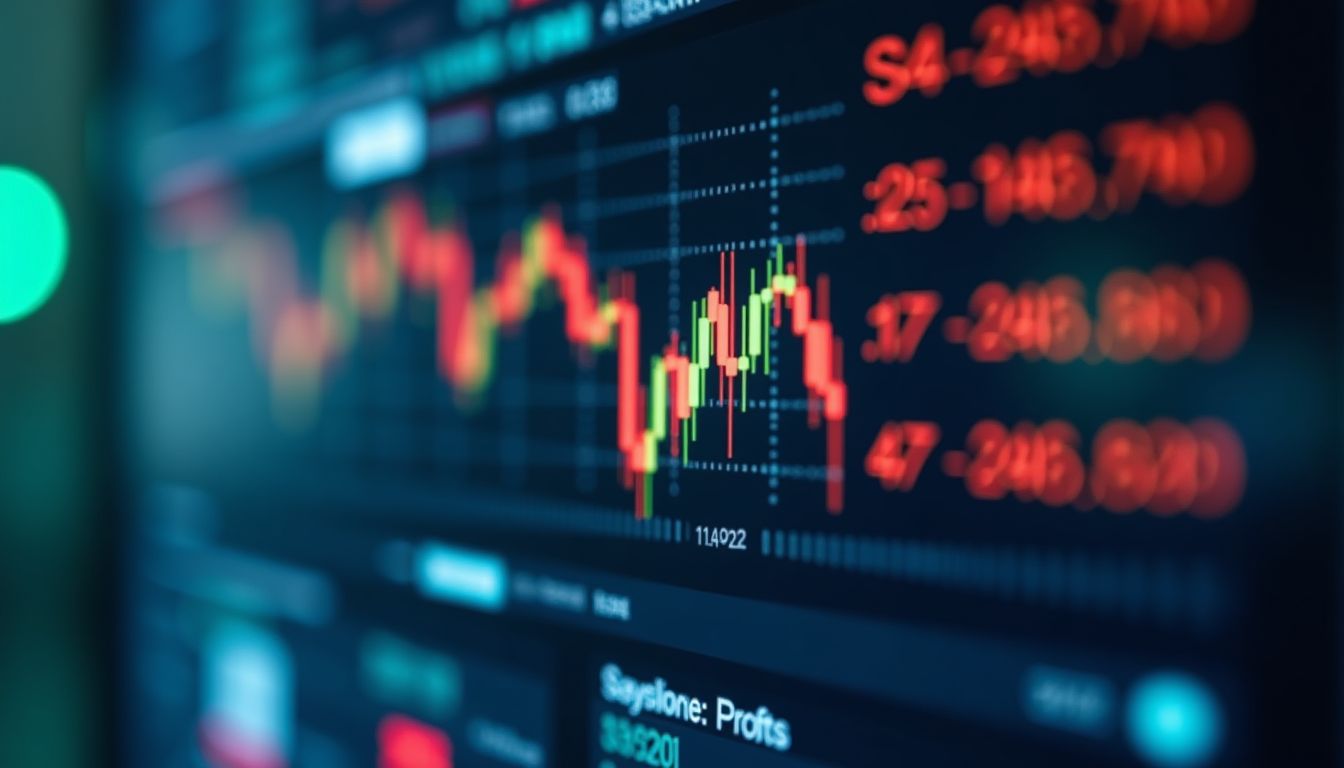
There's something almost primal about watching a four-digit number drop in a single day. The Dow tumbling 1,000 points over fears of a prolonged war with Iran isn't just a financial headline — it's the kind of news that makes ordinary people glance nervously at their 401(k) apps for the first time in months. And that's exactly what makes this moment so electrically tense right now.
Here's the thing about market crashes: they're one of the few economic events that genuinely cut across every demographic line. Whether you're a retiree watching your pension, a millennial with a modest index fund, or a small business owner trying to budget for next quarter, a 1,000-point drop lands differently than abstract inflation statistics. It's visceral, it's immediate, and the number is big enough to feel catastrophic even if you're not entirely sure what the Dow Jones actually measures.
The Iran angle adds a layer of geopolitical dread that money anxiety alone can't produce. We're not talking about a tech bubble or a banking scandal here — this is the market reacting to the possibility of actual war. That combination of financial instability and military conflict triggers something deep in the collective memory, particularly for generations who lived through the economic chaos that followed the Iraq War or remember gas prices spiking after regional tensions in the Middle East flared up. War and economic anxiety have always been uncomfortable roommates, and right now they're both sitting on the couch.
What makes this particular moment uniquely captivating is the uncertainty multiplier. Markets hate uncertainty more than they hate bad news, and a "prolonged war" scenario is basically uncertainty on steroids. Nobody can tell you what next week looks like, let alone next quarter. That ambiguity is psychologically brutal for people who are already navigating post-pandemic financial stress, stubborn inflation, and interest rates that have made buying a home feel like a fantasy. Adding geopolitical instability to that pile is the financial equivalent of finding out your flight is delayed indefinitely — with no explanation and no end in sight.
There's also a very human element to why this story resonates beyond finance circles. People intuitively understand that stock market swings are often a leading indicator — a kind of economic canary in the coal mine. When institutional investors and hedge funds start panic-selling, regular folks start wondering what they know that we don't. It creates this unsettling feeling that the adults in the room have spotted something coming and are quietly heading for the exits. That's the kind of anxiety that spreads fast and sticks around.
And let's be honest — the timing matters enormously. We're in an era where trust in institutions is already fragile, where people are hypersensitive to signals of instability, and where the news cycle moves so fast that a 1,000-point drop can feel like one chapter in a much longer, scarier story. The Iran fears don't exist in isolation; they land on top of an already exhausted and financially stressed public that is acutely tuned to anything that threatens the thin stability they've managed to piece together. That's not just a news story. That's a mirror reflecting back some very real collective anxiety — and that's precisely why it hits so hard.