
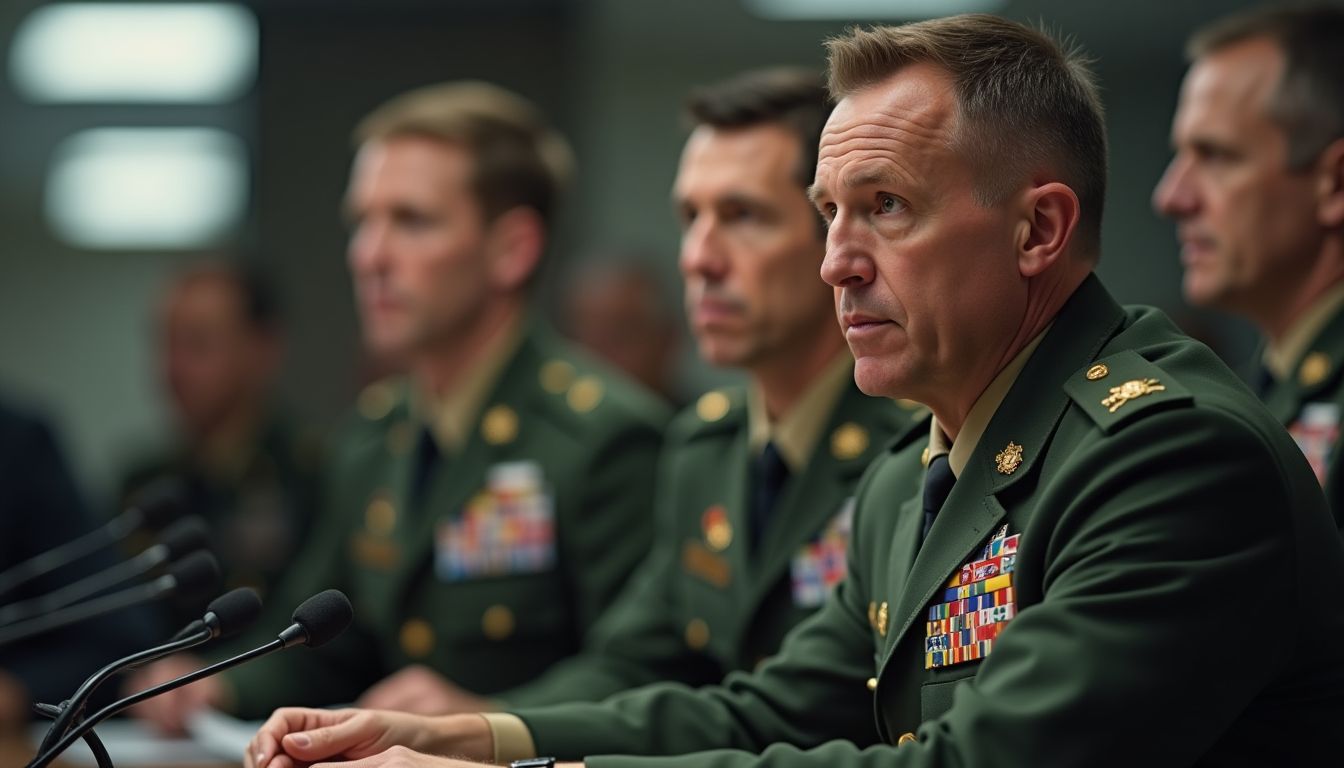
There's something viscerally gripping about watching the highest ranks of military power get reshuffled in real time. The US Army Chief of Staff isn't some mid-level bureaucrat you can swap out quietly on a Tuesday afternoon — this is the four-star general who sits at the absolute apex of the Army's command structure. When Defense Secretary Pete Hegseth reportedly asked him to step down, it sent a signal that something significant is happening inside the Pentagon's walls, and people can feel it even if they can't quite articulate why.
The timing matters enormously here. Hegseth himself is a relatively recent and deeply controversial figure at the helm of the Defense Department, having faced intense scrutiny during his confirmation process. His willingness to move against one of the Army's most senior leaders this early in his tenure suggests he's either extraordinarily confident or operating under explicit pressure from above to reshape the military's leadership culture fast. Either way, that's a dramatic power play that naturally captures public attention — it's the kind of move that has real consequences for national security, not just Washington optics.
What makes this particularly fascinating is the civilian-military tension it represents. Americans have a complicated but deeply felt relationship with their military institutions. The armed forces consistently rank among the most trusted institutions in the country, so when civilian political leadership starts visibly asserting dominance over senior military commanders, it triggers a genuine anxiety in a lot of people. It raises uncomfortable questions: Is this healthy democratic oversight, or is it the politicization of an institution that's supposed to transcend partisan politics?
There's also a very human drama baked into this story that people instinctively connect with. The Army Chief of Staff spent decades — probably 35 or 40 years — climbing through one of the world's most demanding hierarchies. Every assignment, every deployment, every grueling evaluation led to that chair. And then, reportedly, a phone call or a meeting changes everything. That arc of achievement followed by abrupt dismissal resonates with something deeply universal, regardless of your politics or your feelings about the military.
The broader cultural conversation this taps into is about who actually controls America's most powerful institutions right now. The current administration has made no secret of its desire to restructure federal agencies and replace career officials with people more aligned with its vision. The military was always going to be a flashpoint in that project — it's simultaneously the most powerful and the most symbolically sacred institution in American public life. Watching that confrontation happen in real time feels genuinely historic to a lot of people, whether they're cheering it or dreading it.
Here's the bottom line: stories about power, loyalty, and institutional change hit differently when the institution in question is the United States Army. This isn't a cabinet reshuffle or an agency reorganization that affects policy paperwork. The Army Chief of Staff helps shape how America projects force in the world, how it prepares for conflict, and how it treats the men and women who serve. When that position gets destabilized under politically charged circumstances, the stakes feel real and immediate in a way that transcends the usual Washington drama. That's exactly why this story cuts through the noise — because deep down, people understand that the consequences here extend well beyond any one general's career.