
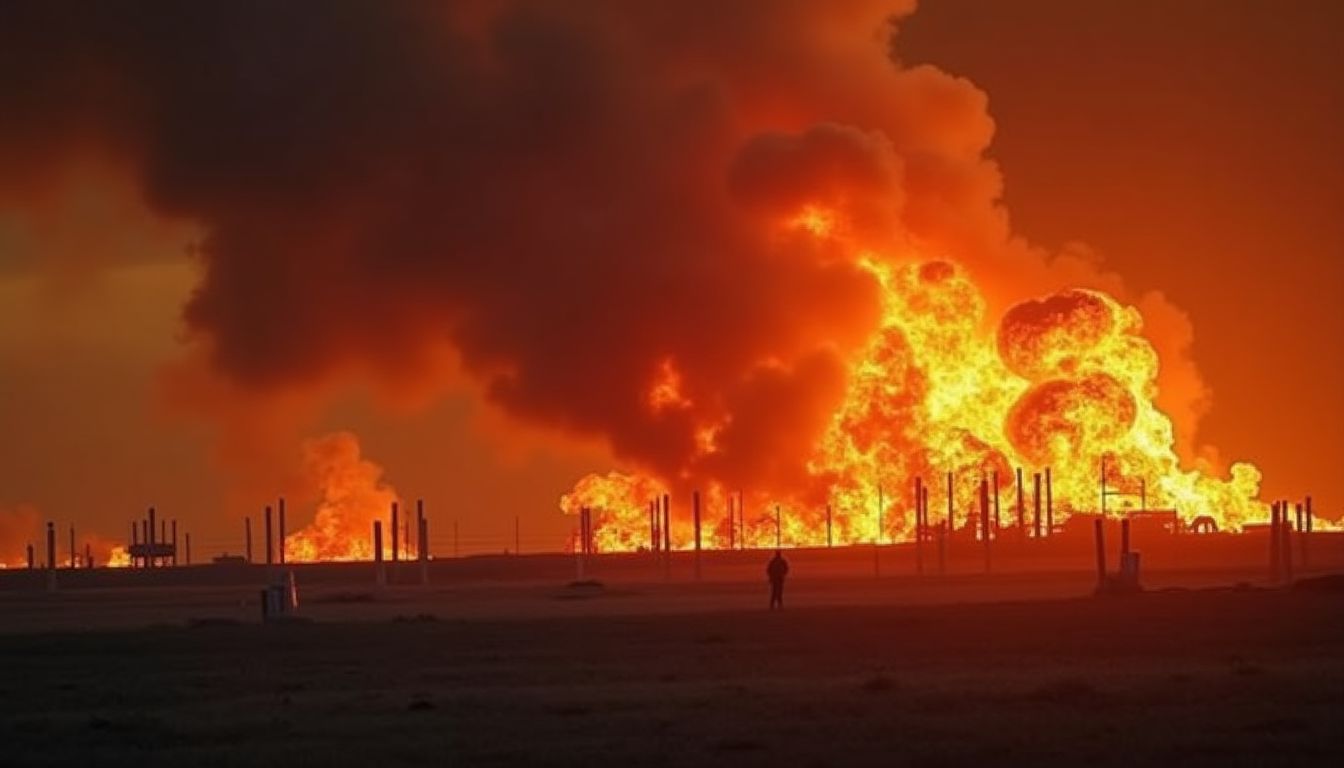
So here's the thing about this story that makes your stomach drop a little. Iranian forces reportedly struck five US Air Force refueling planes stationed in Saudi Arabia. Not a proxy skirmish. Not a near-miss. Actual American military hardware, on allied soil, getting hit. That's the kind of headline that cuts through the noise because it represents a genuine escalation threshold being crossed — and people instinctively understand that, even without a military briefing.
The refueling planes detail matters more than it might seem at first glance. These aren't just any aircraft. Aerial refueling tankers are the unsung backbone of American air power projection — they're literally what keeps fighter jets and bombers in the sky for extended operations. Targeting them isn't random. It's a calculated, strategic message that says "we know exactly how your military machine works, and we know where to poke it." That level of tactical specificity is genuinely alarming to anyone who understands military logistics, and morbidly fascinating to those learning about it for the first time.
The timing here is everything. The Middle East has been a pressure cooker of competing tensions — ongoing conflicts, shifting alliances, and a US foreign policy posture that keeps oscillating between engagement and restraint. Every major actor in the region has been quietly recalibrating their red lines. When Iran takes a swing directly at American assets, it fundamentally changes the diplomatic math. It's the geopolitical equivalent of someone flipping a table at a tense dinner party — suddenly nobody's pretending everything is fine anymore.
There's also the Saudi Arabia angle, which adds its own layer of complexity. Saudi Arabia and the US have had a famously complicated relationship — oil politics, human rights tensions, the Abraham Accords reshaping regional alliances. The fact that American planes were sitting on Saudi soil in the first place tells a story about strategic positioning. And the fact that Iran was apparently willing to strike them there tells an even bolder story about how much Iran's risk tolerance may have shifted. People are rightfully asking: what changed, and what comes next?
What makes this moment genuinely unique is the combination of directness and audacity. Iran has historically operated through proxies — Hezbollah, Houthi forces, various militia groups across Iraq and Syria. A direct strike on American military equipment is a different kind of move entirely. It's Iran signing its name to something. That shift from plausible deniability to open acknowledgment represents a psychological and strategic crossing of the Rubicon that analysts have been warning about for years. Now it's apparently not hypothetical anymore.
The human dimension shouldn't get lost in all the geopolitical chess-talk either. These are real aircraft, real personnel, real stakes. People are drawn to this story because beneath the strategy briefings and diplomatic cables, there's an awareness that decisions made in the next few days and weeks could ripple outward in ways that affect a whole lot of ordinary lives — in the Middle East, in the US, and far beyond. That weight is palpable, and it's why this story grabs people by the collar and doesn't let go.
Ultimately, this is a story about thresholds — and what happens after they're crossed. The world has spent decades watching Iran and the US engage in a cold confrontation with carefully maintained deniability on both sides. If these reports hold up, that particular fiction may be over. And whether you're a foreign policy wonk or just someone trying to understand why the news feels heavier than usual today, that's the kind of shift that deserves serious attention. The next move matters enormously, and right now, the whole world is watching to see what it is.