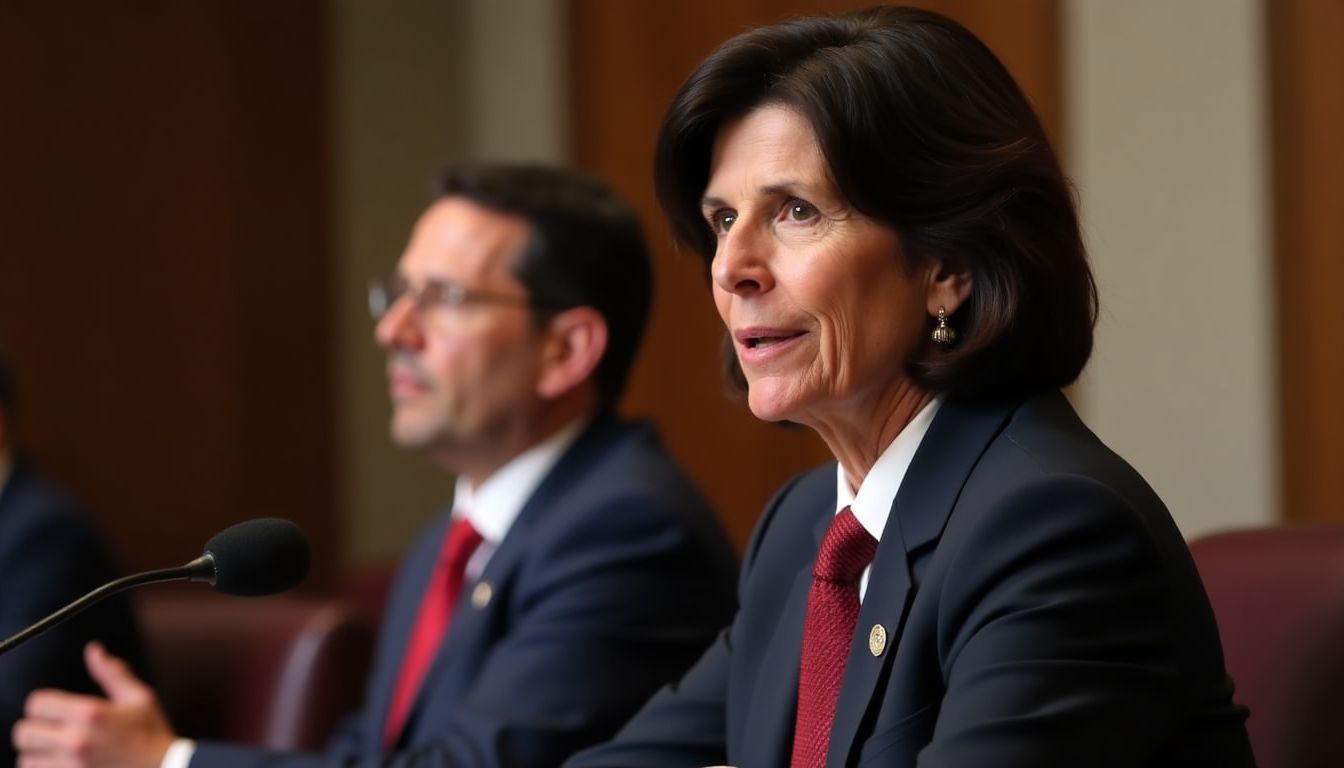
There's something almost theatrical about a Senate oversight hearing — the formal setting, the carefully prepared questions, the witnesses trying to look composed under hot lights. But every once in a while, one of these hearings produces a genuine moment that cuts through the political theater. Senator Thom Tillis calling for Kristi Noem's resignation during her DHS oversight testimony is exactly that kind of moment, and it matters for reasons that go way beyond the drama itself.
Here's the thing that makes this story land differently than your typical partisan sparring: Tillis is a Republican. When a member of your own party stands up in a formal hearing and says "you should go," that's not politics as usual — that's a signal flare. It breaks the unspoken rule of party solidarity that usually keeps these hearings predictable and performative. People are paying attention because it feels like a crack in a wall that rarely cracks publicly.
Noem has had a rough run in the public eye. Between the infamous dog story in her memoir and questions about her management of immigration enforcement at DHS, she's become something of a lightning rod. But criticism from political opponents is easily dismissed as partisan noise. Criticism from your own team, delivered under oath at a formal Senate hearing, is a completely different beast. It carries institutional weight that cable news soundbites simply don't have.
The timing matters enormously here. Immigration and border security are at the absolute center of national conversation right now, and DHS is the agency at the epicenter of it all. When the person running that agency is being called out — not by opponents, but by allies — it raises genuine questions about competence, accountability, and whether the administration's signature policy agenda is actually being managed effectively. People who care deeply about those issues, on all sides, have very real stakes in this conversation.
There's also a deeper cultural fascination with accountability moments in an era where accountability often feels like a myth. Oversight hearings are supposed to be where power answers for itself, but they so frequently devolve into political grandstanding that people have largely stopped expecting anything real to emerge from them. When something genuine happens — when a senator breaks from script and says the quiet part loud — it feels almost startling. It reminds people that these institutions can still produce real friction and real consequences.
What makes this particular moment stick is that it combines several things people find deeply compelling simultaneously: political betrayal, questions of competence at a high-stakes agency, a cabinet secretary under visible pressure, and the rare spectacle of consequences potentially mattering. Legal and policy communities are especially engaged because the implications for DHS leadership and immigration enforcement policy are genuinely significant — this isn't just drama for drama's sake. The legal mechanics of what happens when a cabinet secretary loses confidence from both sides of the aisle is a legitimately fascinating question.
The bottom line is that this story resonates because it feels real in a media landscape saturated with performances. A Republican senator, in a formal setting, on the record, calling for a fellow Republican cabinet secretary to step down — that's not a tweet, that's not an anonymous source, that's not a leaked memo. It happened, it's documented, and it has institutional consequences that will ripple forward. In a world where people have become deeply skeptical that anything in Washington actually means anything, a moment with real weight is something people genuinely can't look away from.