
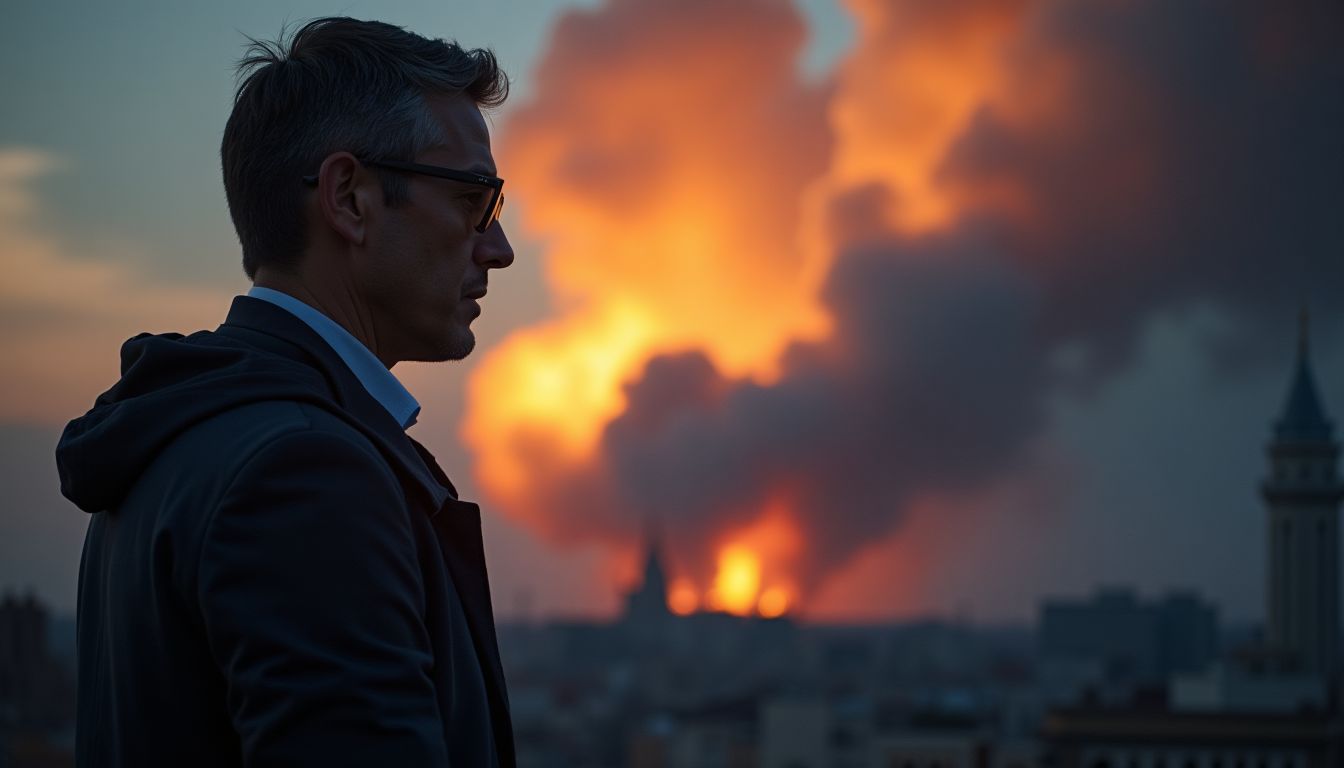
Picture this: you're scrolling through the news and suddenly see "preemptive strike" in a headline involving two nations that have been locked in a shadowy conflict for decades. Your stomach drops a little, doesn't it? That visceral reaction explains exactly why Israel's announced preemptive strike against Iran has captured global attention in ways that routine diplomatic tensions simply don't. There's something uniquely unsettling about the word "preemptive" – it suggests we've crossed from the realm of possibility into active conflict.
The timing couldn't be more loaded with global anxiety. We're living through what feels like a cascade of international tensions, from ongoing conflicts in Ukraine to trade wars and nuclear posturing. People are already on edge about the stability of the world order, and when two major Middle Eastern powers escalate their long-simmering conflict, it triggers that deep-seated fear that regional conflicts have a nasty habit of becoming everyone's problem. The Middle East has been the epicenter of global energy markets and geopolitical chess games for generations, so when things heat up there, the whole world pays attention.
But there's something particularly captivating about this specific moment in the Israel-Iran dynamic. These two nations have been engaged in what intelligence experts call a "shadow war" for years – cyber attacks, proxy conflicts, assassinations of nuclear scientists, mysterious explosions at military facilities. It's been the kind of conflict that makes great spy novels but happens largely out of public view. When Israel's Defense Minister announces a preemptive strike openly, it's like watching that shadow war step into the spotlight, and that transition from covert to overt operations signals a significant escalation that even casual news consumers can recognize as important.
The psychology behind why this resonates goes deeper than just fear of conflict, though. There's something about the concept of preemptive action that taps into fundamental questions about self-defense, aggression, and who gets to decide when a threat is imminent enough to justify the first strike. These are the kinds of moral and strategic dilemmas that people instinctively want to weigh in on, even if they don't have all the classified intelligence. It's the international relations equivalent of a trolley problem – complex ethical questions wrapped in life-and-death stakes.
What makes this moment unique is how it intersects with broader concerns about nuclear proliferation and regional stability. Iran's nuclear program has been a source of international tension for over a decade, with sanctions, negotiations, withdrawn agreements, and constant speculation about military options. When Israel, widely believed to possess its own nuclear capabilities, takes preemptive military action against Iranian targets, it raises the specter of how these conflicts might escalate in an era where both conventional and unconventional weapons are in play.
The cultural significance extends beyond immediate military concerns to touch on deeper questions about sovereignty, international law, and the changing nature of warfare itself. In an interconnected world where conflicts don't stay contained, people intuitively understand that what happens between Israel and Iran doesn't stay between Israel and Iran. Global supply chains, energy prices, alliance structures, and refugee flows all hang in the balance, making this everyone's business whether they want it to be or not. That's why a defense minister's announcement can instantly become the kind of story that stops conversations and makes people reach for their phones to check the latest updates.