
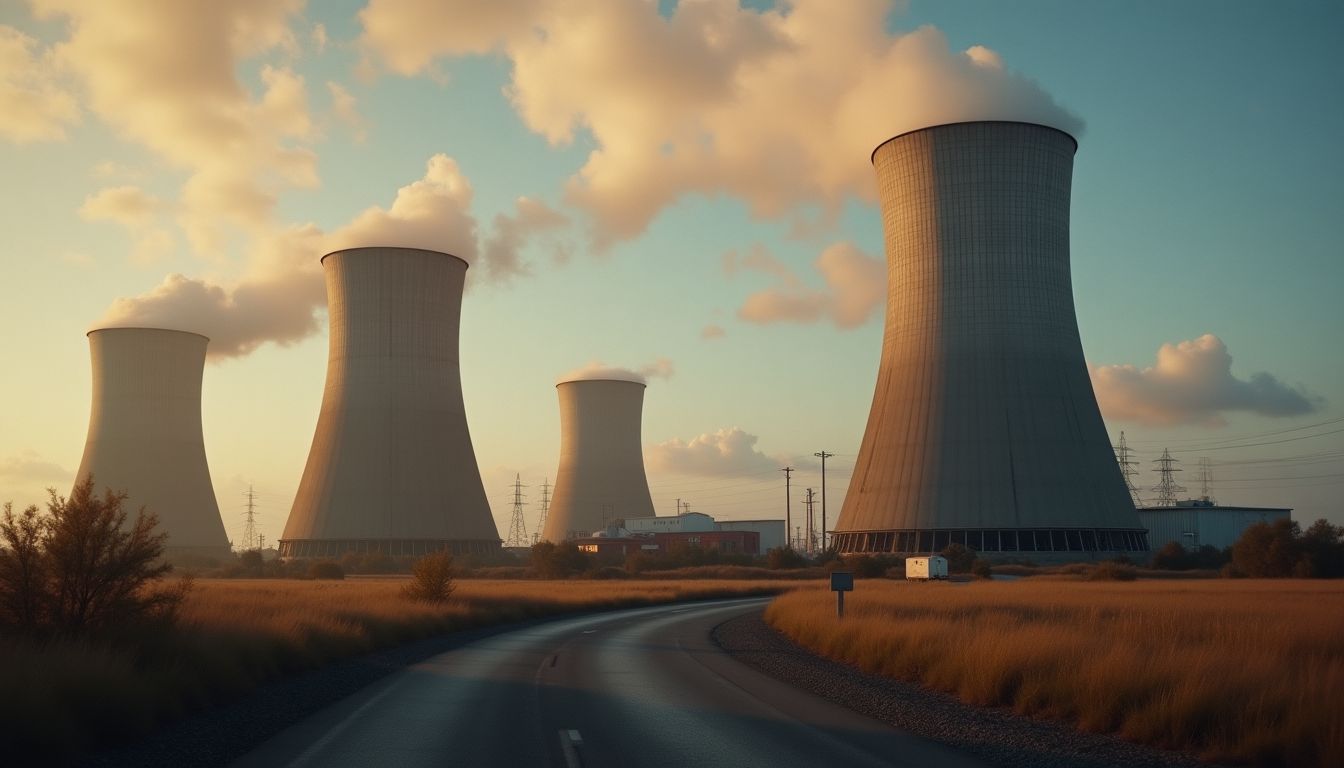
There's a particular kind of dread that settles in when you hear the words "nuclear facility" and "missile strike" in the same sentence. That's not hyperbole — that's just human wiring. When Iran launched strikes on the Israeli town housing a nuclear facility in direct retaliation for the Natanz attack, something shifted in the geopolitical temperature that even the most news-fatigued person could feel in their gut. This isn't background noise. This is the kind of story that makes you put down your phone and actually pay attention.
Here's why this particular moment cuts through: we've watched the Iran-Israel shadow war simmer for decades, trading covert operations, assassinations of scientists, and cyberattacks like some kind of deadly chess match. Natanz has been the crown jewel of that rivalry — it's Iran's primary uranium enrichment site and has been sabotaged before, most famously by the Stuxnet worm back in 2010. But now we're seeing open, direct, retaliatory strikes on Israeli soil near nuclear infrastructure. That's not shadow war anymore. That's something considerably louder and more dangerous.
The cultural weight here is enormous, and it operates on multiple levels. For one, nuclear facilities occupy a specific psychological space in the collective imagination. We grew up with Chernobyl documentaries, Three Mile Island cautionary tales, and decades of Cold War anxiety baked into our cultural DNA. The moment any military action gets within striking distance of nuclear infrastructure, it triggers a deeply primal alarm. People aren't just worried about geopolitics — they're worried about something far more catastrophic and irreversible entering the picture.
What makes this moment genuinely unique is the tit-for-tat symmetry of it. Iran isn't denying the strike or being coy about the motivation — this is explicitly framed as retaliation. That kind of open acknowledgment of an escalatory exchange between two nuclear-adjacent powers is rare and alarming. It removes the diplomatic fig leaf that usually keeps these conflicts from spinning into something uncontrollable. When nations start openly keeping score in retaliatory strikes, the rulebook for de-escalation gets a lot thinner.
There's also the question of timing and the broader regional context. The Middle East has been an open wound for the past couple of years, with multiple conflicts bleeding into each other in ways that make clean narratives nearly impossible. People are trying to track overlapping proxy wars, shifting alliances, and now direct state-on-state strikes involving facilities that could theoretically destabilize far more than just the immediate region. The complexity is overwhelming, which paradoxically makes each dramatic new development MORE attention-grabbing, not less — because people are desperately searching for the moment that clarifies what's actually happening.
And then there's the human element that always drives these stories deeper than the geopolitical analysis. Real people live in that Israeli town. Real scientists and workers operate in facilities like Natanz. When the abstraction of international conflict becomes a specific place with a specific name that you can look up on a map, that's when the story stops being a headline and starts being something that lands differently. People connect to geography in a way they can't always connect to policy briefings.
The reason this story resonates so deeply right now is that it combines our oldest fears — nuclear catastrophe, unchecked escalation, the fragility of regional stability — with a very modern sense of helplessness about watching events unfold in real time. We're not observers of history anymore; we're witnesses to it, refreshing feeds, looking for the update that tells us whether this is another chapter in a long conflict or the beginning of something categorically worse. That tension, that not-knowing, is precisely what makes this moment so impossible to look away from.