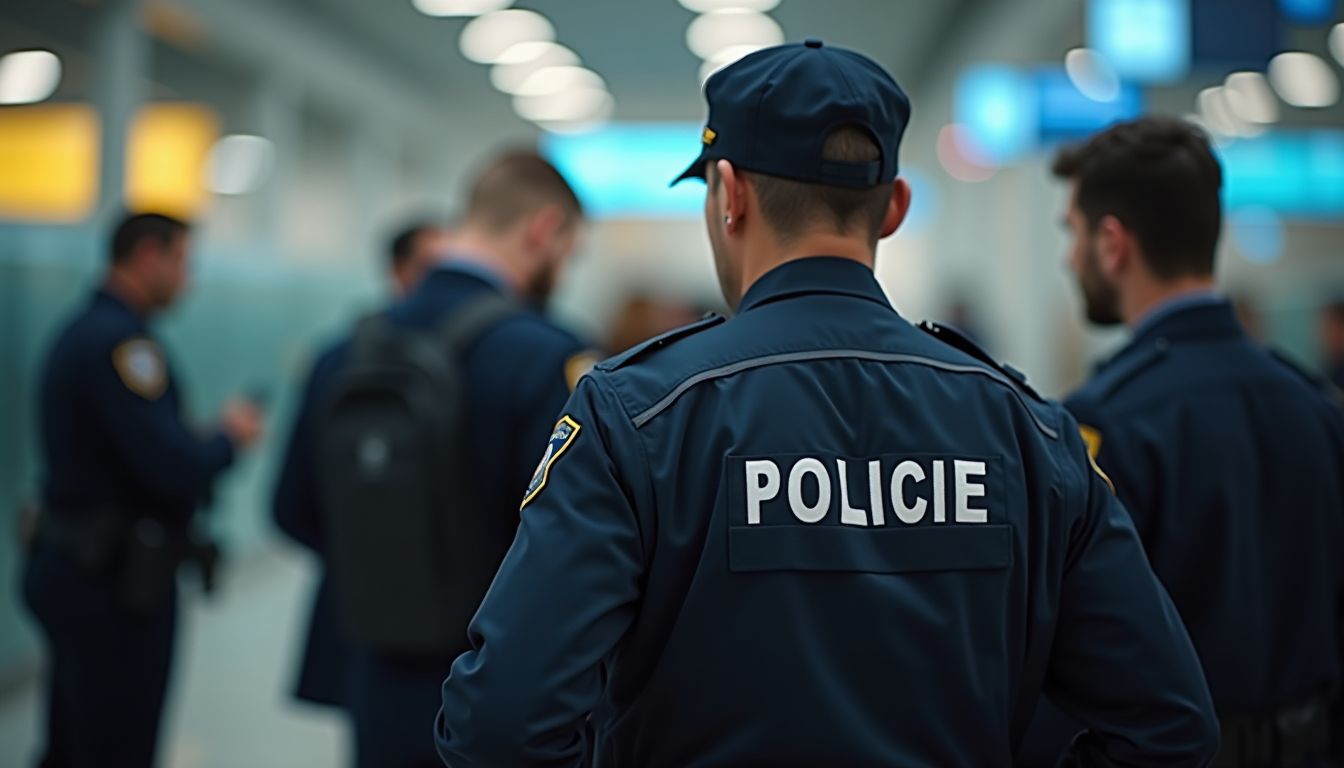
Picture this: you're rushing through JFK airport, coffee in hand, shoes already off, and the person checking your ID at the security checkpoint isn't the usual TSA agent you've mentally prepared yourself to deal with. It's an ICE officer. That's the kind of moment that stops people dead in their tracks — and for very good reason.
This isn't just an interesting airport quirk. It represents something genuinely unprecedented in how immigration enforcement agencies are being deployed in the United States. ICE — Immigration and Customs Enforcement — has a very specific mandate that historically kept them away from domestic security checkpoints at major airports. Seeing them step into a TSA role blurs a line that most Americans didn't even realize existed, and that blurring is exactly what's making people pay attention.
The timing matters enormously here. Immigration policy has been one of the most charged and consequential political battlegrounds in recent years. Every shift in how enforcement agencies operate gets read as a signal — either of escalating control or necessary security, depending entirely on who you ask. When a photo surfaces showing ICE literally in the checkpoint lane at one of the busiest international airports in the world, it becomes a kind of Rorschach test for where you stand politically and what kind of country you think you're living in.
There's also something deeply visceral about airports specifically. They're these liminal spaces where everyone is already anxious, already stripped of their shoes and dignity, already hyper-aware of authority figures. The checkpoint is the threshold moment — you're either cleared to go or you're not. Having ICE be the ones making that call carries a psychological weight that's hard to overstate, especially for immigrant communities, visa holders, or anyone who's ever worried about their documentation status.
What makes this moment uniquely captivating is that it was caught and shared by an ordinary person — the "[OC]" tag meaning Original Content, a real person just documenting what they witnessed. That authenticity is everything. This isn't a press release or a government announcement. It's someone saying "hey, look at this thing that's actually happening right now in front of me." That kind of raw, unfiltered documentation carries a credibility that official channels simply can't manufacture.
The deeper cultural conversation here is about mission creep and institutional boundaries. Americans have a complicated but real relationship with the idea that different agencies do different things. The FBI isn't supposed to be doing what local cops do. The military isn't supposed to police civilians. These separations feel important to a lot of people — not because they're naive about how power works, but because the erosion of those distinctions tends to signal something shifting underneath the surface of how a society governs itself.
Whether you think this is a smart deployment of resources or a concerning expansion of immigration enforcement into everyday civilian spaces, you probably feel something about it. And that emotional charge — that feeling of "wait, is this normal now?" — is exactly the engine driving the conversation. We're collectively trying to figure out whether we're witnessing a one-time operational adjustment or a preview of something more permanent. That uncertainty, that sense of watching history happen in real time at a baggage carousel, is precisely why a single airport photo becomes the thing everyone needs to talk about over lunch.