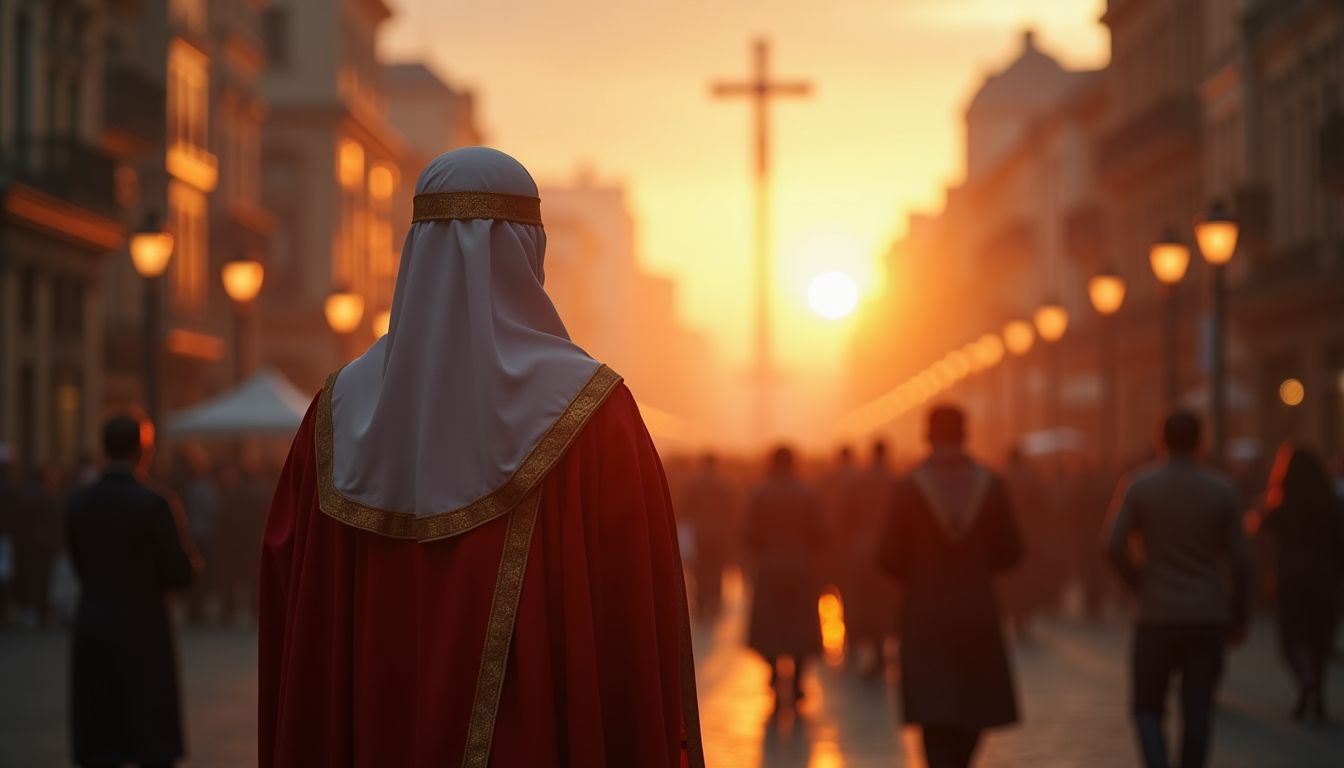
Picture this: It's Palm Sunday, one of the most sacred days in the Christian calendar, marking Jesus's triumphant entry into Jerusalem — the very city where this all happened 2,000 years ago. Catholic leaders are trying to celebrate Mass at a church in that exact city. And police are blocking the door. The symbolic weight of that image alone is enough to make your jaw drop, regardless of where you stand politically or religiously.
Here's why this hits differently. Jerusalem isn't just a city — it's arguably the most spiritually loaded piece of real estate on the planet. It sits at the intersection of Judaism, Christianity, and Islam, and every single action taken there carries outsized meaning. When Catholic leaders are physically prevented from observing Palm Sunday in Jerusalem of all places, it triggers something visceral in millions of people who understand what that location represents. It's not an abstract policy dispute. It's happening on sacred ground, on a sacred day, in the sacred city where Christianity was literally born.
The timing makes this even more charged. We're in an era of extraordinarily heightened tension around Israel, Gaza, and the broader Middle East. The world has been watching that region with an intensity we haven't seen in decades. Any story involving Israeli authorities and religious practice is landing in an already emotionally raw conversation. People aren't just reacting to this one incident — they're reacting to it through the lens of everything they've been processing for months. That context is rocket fuel for public attention.
There's also a universal access-to-worship angle that transcends religion. You don't have to be Catholic, or even Christian, to feel something uncomfortable about images of clergy being turned away from their own church on one of their holiest days. Freedom of religious practice is one of those bedrock values that cuts across cultural and political lines. When it appears to be violated — especially so visibly and on a globally recognized occasion — people from wildly different backgrounds find themselves united in discomfort. That cross-demographic resonance is exactly the kind of thing that makes a story travel fast and far.
Let's also talk about the visual storytelling here. Palm Sunday is inherently dramatic — processionals, palm branches, communal worship. It's joyful and ancient and deeply communal. The contrast between that tradition and police barriers is jarring in a way that's almost cinematic. The human brain is wired to notice disruption, especially when it collides with something deeply familiar and symbolic. This story essentially wrote its own striking image before anyone even picked up a camera.
And then there's the geopolitical chess game underneath all of this. Jerusalem's holy sites have long been flashpoints in negotiations over sovereignty, access, and identity. The question of who controls access to sacred spaces in that city is one of the oldest unresolved tensions in modern international relations. When an incident like this surfaces, it pulls back the curtain on those deeper, slower-burning disputes that rarely get clear resolution. People sense they're not just reading about a blocked church service — they're glimpsing a much bigger, much older struggle playing out in real time.
At the end of the day, this story resonates because it manages to be simultaneously ancient and urgently current. It involves faith, power, contested land, religious freedom, and one of the most watched geopolitical situations on earth — all colliding on a single Sunday morning. That's not a news story. That's a pressure point. And when something touches that many nerves at once, in a moment when the world is already paying close attention, it doesn't just capture public attention. It demands it.