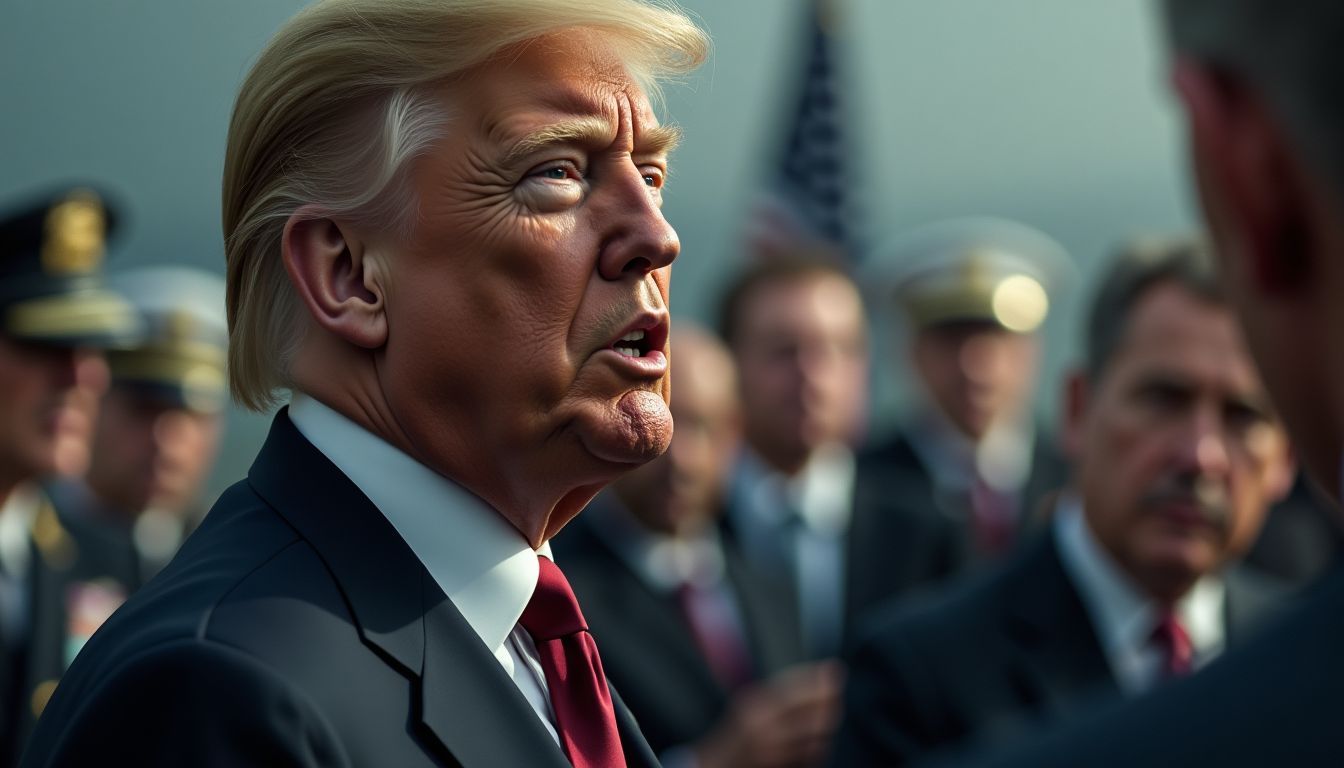
So here's the scene: Japan's Prime Minister is standing right there, cameras rolling, a formal diplomatic moment unfolding — and Donald Trump responds to a question about allied communication by invoking Pearl Harbor. Directly. To Japan's face. If this were a movie script, the producer would send it back saying it was too on the nose. But here we are, and that's precisely why this moment has cut through the noise like almost nothing else in recent memory.
The reason this lands so hard isn't just the shock value, though there's plenty of that. It's the layered absurdity of the context. Trump was being questioned about why the U.S. didn't notify allies before launching Operation Epic Fury — a moment that was already diplomatically sensitive. Rather than offer a measured explanation, he reached back 80-plus years to one of the most painful chapters in U.S.-Japan relations and essentially weaponized it as a punchline. The audacity of the comedic timing, if you can call it that, is genuinely staggering.
There's also a deep cultural nerve being struck here. Japan and the United States have spent decades carefully, deliberately rebuilding a relationship that was forged in the ashes of World War II. The alliance is considered one of the most strategically important in the world. Every diplomatic gesture, every joint military exercise, every state visit has been part of that long, intentional process of trust-building. Watching it get casually tossed into a press conference quip feels like watching someone juggle a priceless vase for laughs.
What makes this moment uniquely captivating is that it forces everyone — regardless of political leaning — to confront the same question simultaneously: What exactly just happened? Supporters, critics, diplomats, historians, and casual observers are all processing the same clip with the same wide-eyed disbelief. That kind of universal "wait, what?" moment is genuinely rare. It transcends the usual partisan bubble because the sheer awkwardness of the situation hits everyone the same way.
There's also the human element of Japan's Prime Minister just... being there for it. The unspoken reaction, the diplomatic composure that has to be maintained in the moment, the internal calculus of how to respond — or whether to respond at all — is something people are intensely curious about. We're all imagining ourselves in that position and feeling secondhand discomfort at a level that's almost cinematic. It's the kind of social cringe that bonds people across cultures because the awkwardness of the situation is universally relatable.
From a broader political standpoint, the comment feeds into a very live conversation about how the U.S. manages its global relationships and what tone it sets on the world stage. At a time when alliance politics and international trust are genuinely consequential — with ongoing conflicts, shifting power dynamics, and complex trade relationships — the idea that a diplomatic meeting could produce a Pearl Harbor joke lands with real weight. It's not just awkward, it's a symptom of something people are actively debating about American foreign policy.
At the end of the day, this moment went nuclear (figuratively, thankfully) because it checks every box for a story that grabs you and won't let go. It's unexpected, it's historically loaded, it's diplomatically chaotic, and it happened in real time with real witnesses. It's the kind of thing that makes historians wince, diplomats sigh deeply into their coffee, and the rest of us stare at our screens wondering if we need to fact-check our own reality. And honestly? That combination is about as viral as it gets.