
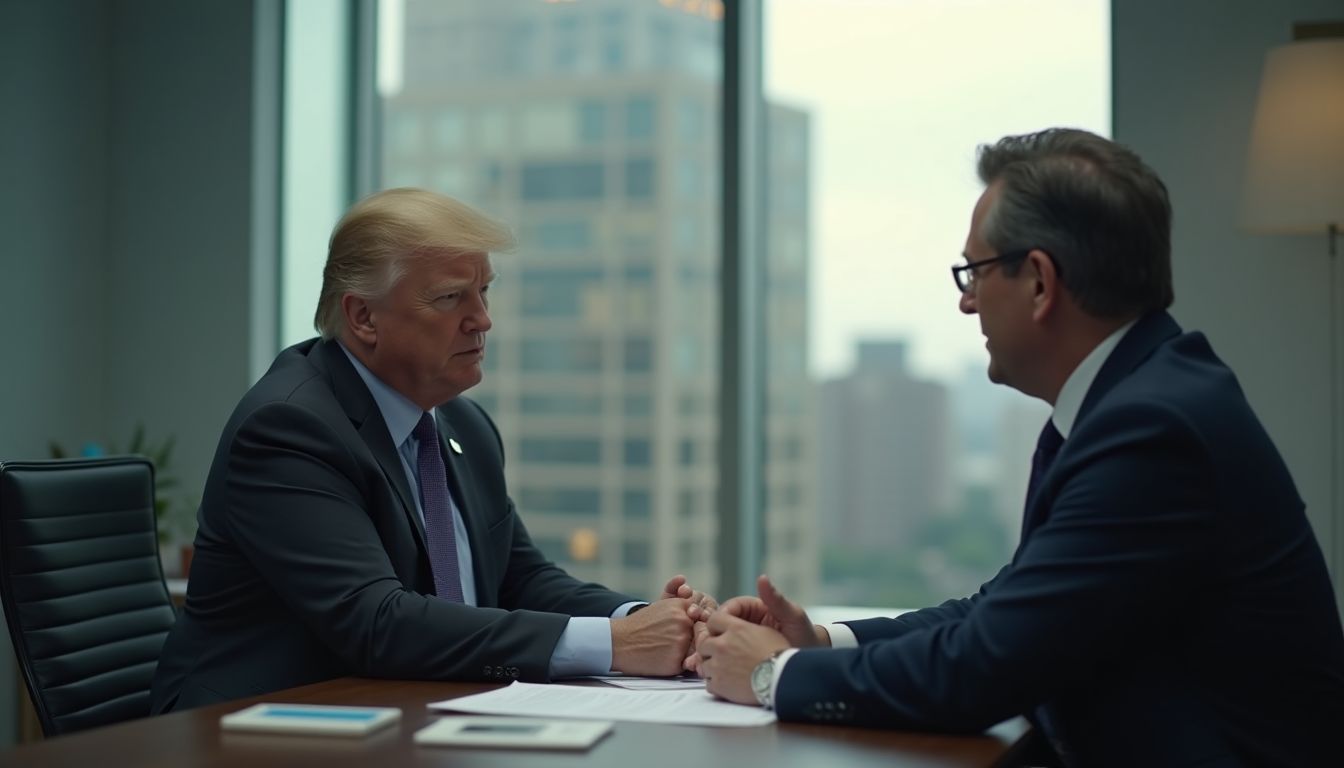
Picture this: one of America's biggest shipping companies just marched into court and essentially told the government, "You owe us money. And we're not asking nicely." FedEx's lawsuit against the Trump administration for tariff refunds isn't just another corporate legal squabble – it's a fascinating power play that reveals how dramatically the relationship between business and government has shifted in recent years.
The timing couldn't be more perfect for capturing public fascination. We're living through an era where people are hypersensitive to who's getting screwed over by whom, especially when it involves massive institutions. Here's FedEx, a company most of us interact with regularly, essentially playing David to the federal government's Goliath. But here's the twist that makes it so compelling: they're not the underdog – they're a corporate heavyweight with the legal firepower to actually win.
What makes this story absolutely irresistible is how it flips our usual narrative about corporate-government relationships. We're used to seeing companies either cozying up to politicians for favorable treatment or getting slapped with regulations and fines. But FedEx is doing something much more audacious – they're treating the government like any other customer who didn't pay their bill. It's the corporate equivalent of sending a debt collector after Uncle Sam.
The cultural moment couldn't be more ripe for this kind of story. Americans are exhausted by feeling powerless against large institutions, whether that's big tech, big pharma, or big government. Watching one massive entity hold another massive entity accountable scratches an itch we didn't even know we had. It's like watching two giants wrestle while the rest of us get to eat popcorn and pick sides.
There's also something deeply satisfying about the mundane specificity of it all. This isn't about abstract policy or political theater – it's about actual money that was allegedly owed and not paid. Everyone understands the frustration of being owed money by someone who has the resources to pay but just... doesn't. Whether it's a freelancer chasing down a client or a contractor waiting for payment, we've all been there.
The Supreme Court ruling that enabled this lawsuit adds another layer of intrigue. It's not just FedEx being aggressive – they now have legal precedent backing their play. This transforms the story from "corporate complaining" to "legitimate legal reckoning." Suddenly, it's not about whether they have a case, but about how much money might change hands and what precedent this sets for other companies with similar grievances.
Perhaps most importantly, this story arrives at a moment when people are craving accountability from all directions. We want politicians held accountable, we want corporations held accountable, and now we get to watch them hold each other accountable. It's institutional accountability as spectator sport, and frankly, we're here for it.
What makes this particularly fascinating is that it represents a new kind of corporate activism – not the social justice kind we've become accustomed to, but old-school financial accountability activism. FedEx isn't making a statement about values or taking a political stance; they're simply saying, "Pay what you owe." In an era of increasingly complex corporate-government relationships, there's something refreshingly straightforward about that approach.