
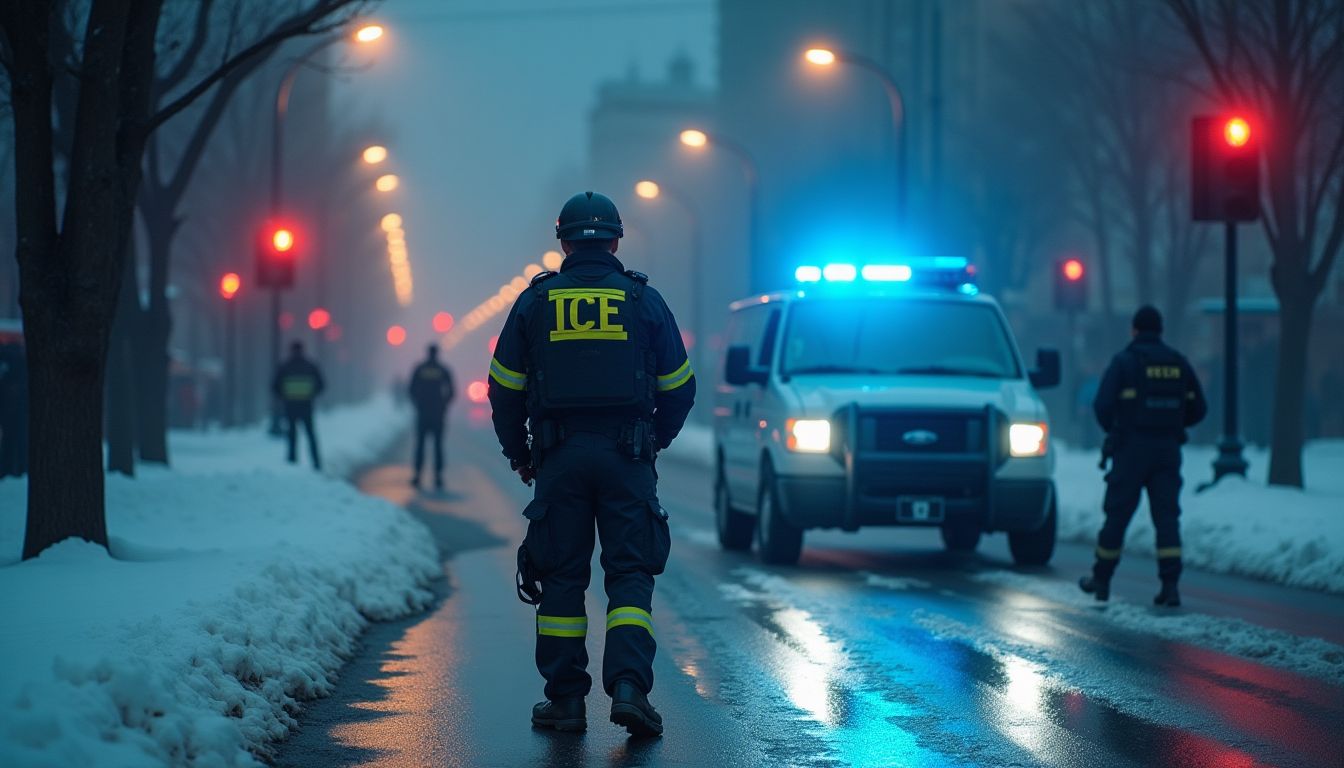
Picture this: a federal immigration officer, armed and trained, finds himself in such an intense confrontation that he's calling 911 saying he might have to shoot. It's the kind of moment that cuts through all the political noise because it reveals something raw and immediate about how power actually works when it's challenged on the street level. This isn't about policy debates in Washington – this is about what happens when the rubber meets the road in Portland.
What makes this story so gripping is the role reversal at its heart. Here's someone who represents federal authority, literally calling the local cops for help. It's like watching the bouncer call security. The phrase "I'm going to have to shoot this kid" captured in that 911 call carries so much weight because it reveals the human moment of uncertainty beneath the institutional armor. People are fascinated by these cracks in the facade, especially when they involve agencies that are supposed to project unwavering strength.
The timing couldn't be more significant. We're living through an era where every interaction between law enforcement and civilians gets dissected, where body cameras and cell phones have made every confrontation potentially public. Immigration enforcement has become one of the most polarizing issues in American politics, and Portland has positioned itself as a sanctuary city that actively resists federal immigration policies. When these forces collide on the street, it creates exactly the kind of tension that makes people pay attention.
There's also something deeply American about this story that resonates beyond politics. It taps into our complex relationship with authority and our fascination with moments when that authority feels threatened or uncertain. The fact that an armed federal officer felt the need to call local police suggests a loss of control that people find both concerning and revealing. It raises questions about training, about de-escalation, about what happens when federal and local priorities clash not in courtrooms but on actual street corners.
What really drives engagement with stories like this is how they serve as a Rorschach test for people's existing beliefs. Some see an officer doing his job under difficult circumstances, calling for backup when things got dangerous. Others see evidence of an immigration system that's fundamentally broken, where confrontations escalate to near-violence. The beauty of a story like this is that it provides enough ambiguity for people to project their own concerns and frustrations onto it.
The Portland setting adds another layer that people can't ignore. This isn't happening in some abstract place – it's happening in a city that's become synonymous with political resistance and federal-local tensions. Portland has been a flashpoint for everything from immigration policy to protest movements, so when something like this happens there, it feels almost inevitable. It's like the perfect storm of all our current anxieties about authority, immigration, and local versus federal power playing out in real time.
Ultimately, this story captures attention because it strips away all the political rhetoric and shows us what these policies actually look like when they're implemented by real people in real situations. It's messy, it's human, and it reveals the gap between how we talk about these issues in theory and how they actually play out in practice. That's the kind of authenticity that cuts through the noise and makes people stop scrolling.