
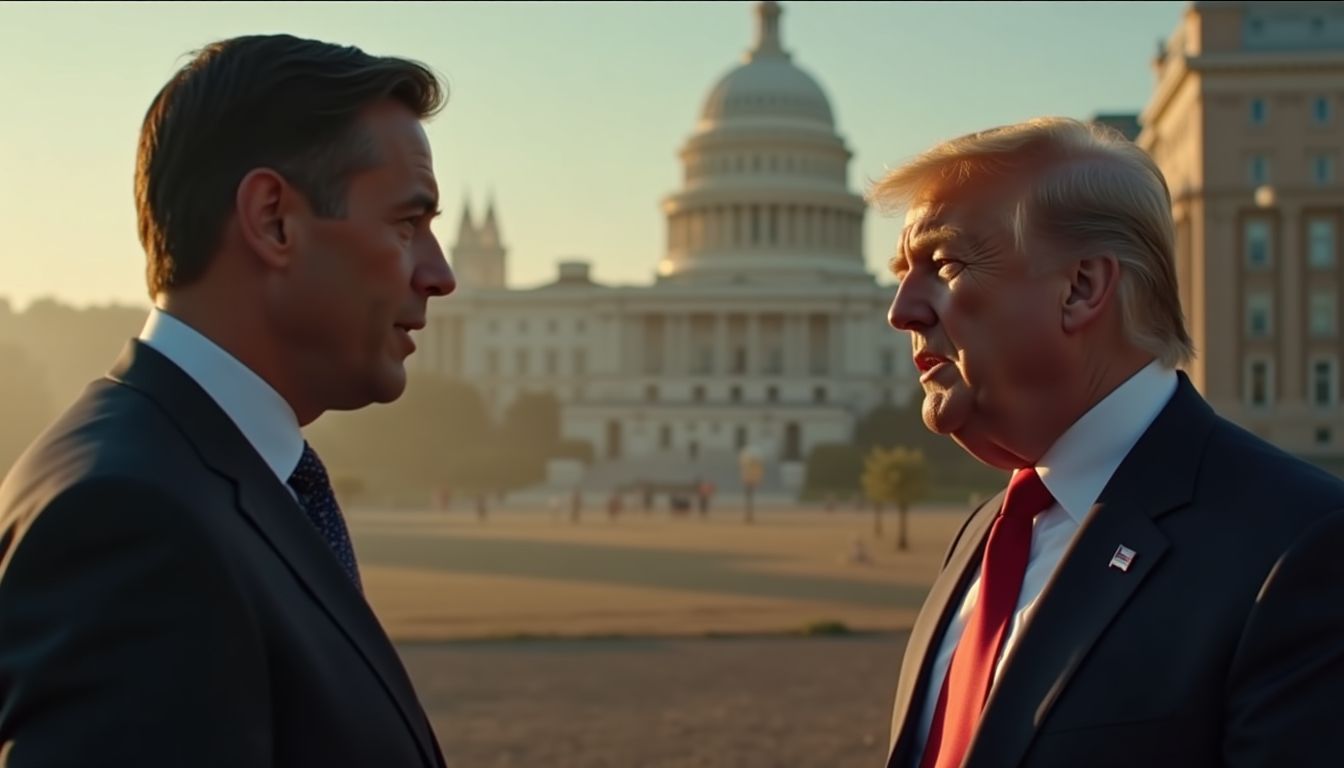
There's something almost theatrical about watching Donald Trump and Gavin Newsom square off on the national stage, and honestly? We're all a little bit hooked. The phrase "Trump Defies, Newsom Sues" sounds less like a news headline and more like the tagline of a political thriller. These two heavyweights represent opposing poles of American political identity, and when they clash, it hits differently than your average partisan squabble.
Here's the thing that makes this resonate so deeply right now: people are exhausted by politics feeling abstract. Tax policy, budget negotiations, regulatory frameworks — these can feel like they exist in some distant bureaucratic fog. But a lawsuit? A direct legal challenge from a sitting governor to a sitting president? That's concrete. That's drama with stakes. People instinctively understand a fight, and this is a very public, very loud one.
The cultural significance runs deeper than just two powerful men butting heads. California and the federal government have been in a slow-burning tension for years, but this moment crystallizes something bigger — the question of where state power ends and federal authority begins is arguably the defining constitutional tension of our era. Newsom stepping up with a lawsuit isn't just political posturing; it's a statement about the soul of American federalism. And Americans, whether they realize it or not, feel that weight.
What makes this particular moment unique is the timing and the personalities involved. Newsom is widely understood to have presidential ambitions barely concealed beneath his gubernatorial duties. Trump, returning to the White House, seems almost energized by opposition. So every clash between them carries this delicious subtext — this isn't just about today's policy dispute, it's potentially a preview of a 2028 matchup. People aren't just watching a legal battle; they're watching a audition tape for the future of American politics.
The "clever comeback" framing that surrounded this story tells you everything about why it captured collective imagination so effectively. Suing the president is, in its own way, a form of rhetorical response — it's not just a legal mechanism, it's a message. In an era where political communication is increasingly about optics and symbolic gestures as much as actual governance, a lawsuit reads as a power move. It's Newsom essentially saying "you want to play? Let's play in federal court." That kind of boldness, regardless of your political leanings, is genuinely attention-grabbing.
There's also a psychological element worth unpacking here. Americans have a deep, almost romantic relationship with the underdog taking on authority, and depending on which side of the aisle you're on, either figure can fill that role. Trump supporters see their guy defying an overreaching state; Newsom supporters see their champion standing up to federal overreach. The story is like a political Rorschach test — you see exactly what you want to see, which means almost everyone finds it compelling for their own reasons.
Ultimately, what keeps people engaged with stories like this is the sense that history is being made in real time. Legal precedents get set, political reputations get built or burned, and the relationship between federal and state power gets redefined in ways that will outlast both men's careers. "Trump Defies, Newsom Sues" isn't just a catchy headline — it's a snapshot of a country actively negotiating what it wants to be. And honestly, that's exactly the kind of story that deserves our attention, even when it makes our blood pressure spike just a little.