
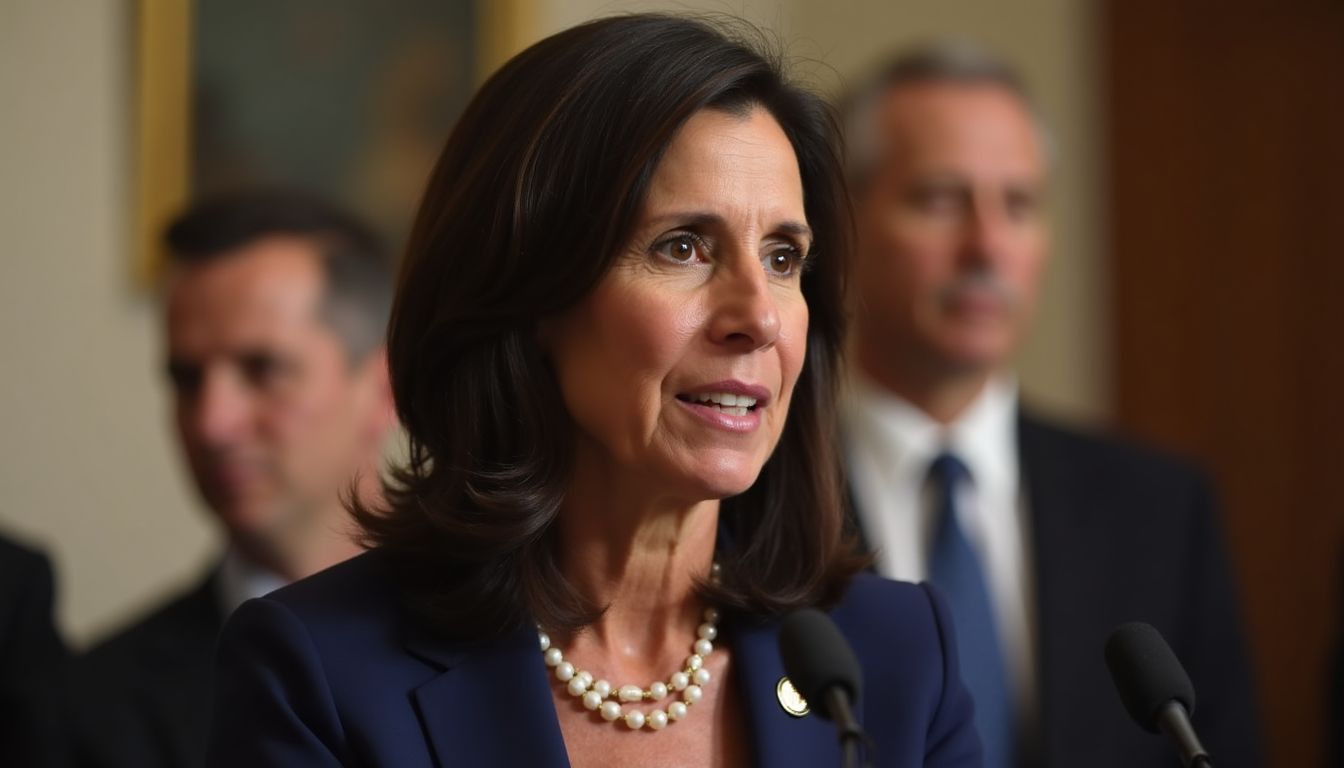
So here's the thing about Kristi Noem getting pushed out by Trump — it's not just another cabinet reshuffle story. This is a window into something far more fascinating: the raw, unfiltered mechanics of loyalty politics at the highest level. When a sitting cabinet secretary gets shown the door amid frustrations from both White House officials AND GOP lawmakers simultaneously, you're watching a political pressure cooker moment that's genuinely rare to witness in real time.
Noem had a pretty spectacular rise and an equally spectacular unraveling. She came in as a MAGA darling, the tough-talking South Dakota governor who seemed to have the Trump playbook memorized. Then came the infamous book where she casually mentioned shooting her own dog, which somehow became a defining moment in modern political self-destruction. It's the kind of story that sticks because it manages to be both deeply weird and weirdly revealing about judgment and political instincts all at once.
But her tenure at the Department of Homeland Security is what really matters here. DHS is arguably the hottest seat in this particular administration — it's ground zero for immigration enforcement, the signature issue that powered Trump's return to the White House. When frustrations build from multiple directions at once, that's a signal that the job wasn't getting done to the satisfaction of people who matter. In Trump World, performance and optics are inseparable, and Noem seemed to struggle with both.
Here's what makes this moment culturally significant beyond the political soap opera: it reflects a broader anxiety people have about competence and accountability in government. There's something almost cathartic about watching the usual rules of political protection — loyalty, party affiliation, ideological alignment — fail to shield someone from consequences. Whether you're a Trump supporter frustrated that the DHS agenda wasn't moving fast enough, or a skeptic who's been watching the chaos unfold, the ouster hits a nerve because it confirms that even within tightly controlled political circles, things fall apart.
The timing matters enormously too. We're deep enough into this administration that the honeymoon period is definitively over. Early cabinet drama can be written off as growing pains. But reshuffles happening now carry a different weight — they signal recalibration, course correction, and frankly, a acknowledgment that the first round of picks didn't all land. That's a significant admission in a political environment where showing any weakness is considered dangerous currency.
What really captures the imagination here is the bipartisan nature of the frustration. When GOP lawmakers are part of the chorus pushing for a change, you're no longer looking at an internal White House squabble. You're looking at a consensus that cut across the usual fault lines. That's genuinely unusual and suggests the problems ran deeper than typical Beltway personality clashes. Congressional Republicans staking out that position don't do it casually — there's political calculation behind it, and that calculation told them distancing was worth it.
Ultimately, the Noem story resonates because it's a human story dressed in political clothes. It's about someone who reached the absolute pinnacle of what they were working toward, and then discovered that getting the job and keeping the job require completely different skill sets. Washington has a long, rich history of people who were excellent at winning power and genuinely terrible at wielding it. Noem joins a crowded hall. The lesson, as always, is that in high-stakes politics, the spotlight that makes you a star can just as quickly become the spotlight that exposes every crack in the foundation.