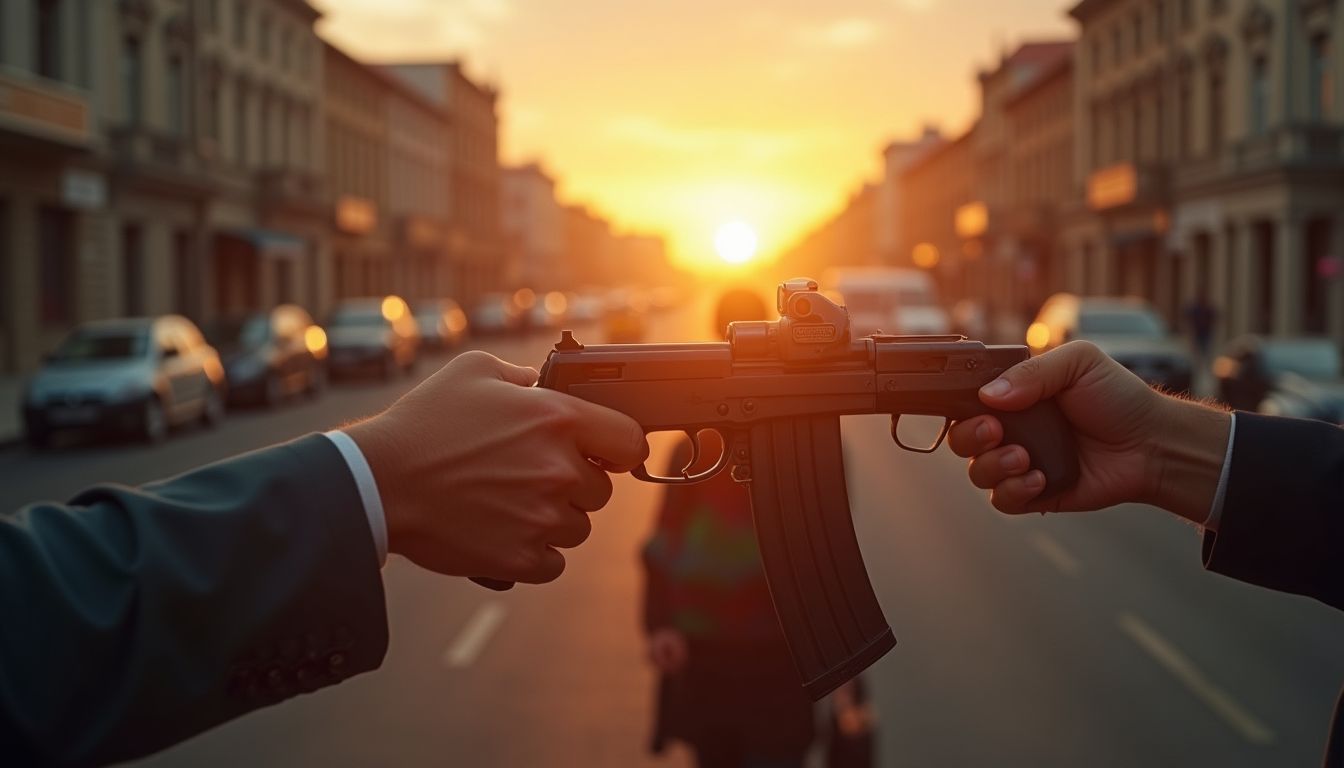
Okay, so let's just sit with this headline for a second. Trump. Guns. Iranian protesters. Kurdish militias. These are not four things you typically expect to find in the same sentence, let alone the same covert operation. And that right there is exactly why this story is hitting differently than your average foreign policy news dump — it's the kind of geopolitical plot twist that makes your jaw drop mid-sip of your morning coffee.
Here's the core of why this resonates so deeply right now. The Iranian protest movement, particularly following the "Woman, Life, Freedom" uprising sparked by Mahsa Amini's death in 2022, became one of the most emotionally charged global human rights moments in recent memory. Millions of people around the world felt personally connected to those protesters risking everything on the streets of Tehran. So when a story emerges suggesting the U.S. government was secretly funneling weapons to those very protesters through Kurdish proxy channels, it reframes everything — the narrative, the motives, and frankly, who was really pulling strings behind the scenes.
What makes this moment uniquely explosive is the uncomfortable complexity it forces us to sit with. Was this a genuine act of solidarity with oppressed people fighting for basic freedoms? Or was it geopolitical chess — using human suffering as a convenient lever to destabilize a regional adversary? These aren't easy questions, and people instinctively resist easy answers when they don't exist. The Kurdish angle adds another layer entirely, because the Kurds have one of the most complicated, often heartbreaking relationships with U.S. foreign policy commitments. Using them as a conduit here raises serious questions about consent, risk, and who ultimately bears the consequences of these shadow operations.
There's also a massive trust dimension at play. We live in an era where institutional credibility is already running on fumes. When a story surfaces suggesting covert arms transfers happening completely outside public knowledge or congressional scrutiny, it feeds directly into a very real and very justified anxiety about the gap between official narratives and actual government behavior. It doesn't matter which political tribe you belong to — the idea that major foreign policy operations happen in the dark, with real human consequences, bothers people across the spectrum in ways that unite unlikely bedfellows.
The Trump factor turbocharged this, obviously. Love him or despise him, Trump as a political figure generates an almost gravitational pull on public attention. But what's genuinely interesting here is that this story doesn't fit neatly into the standard pro-Trump or anti-Trump script. Supporting Iranian protesters could be framed as bold pro-democracy action OR as reckless warmongering depending on your priors. That ambiguity is actually what gives the story legs — it resists being weaponized cleanly by either side, which means it demands actual engagement rather than reflexive hot takes.
And let's be honest about the sheer cinematic quality of the details. Covert weapons transfers. Kurdish militias serving as middlemen. Protesters in one of the world's most surveilled authoritarian states somehow receiving foreign arms. This is the stuff of le Carré novels, except it's allegedly real and recent. Human brains are wired to track narratives with high stakes, secret operations, and moral ambiguity — and this story delivers all three simultaneously. That's not manipulation, that's just how compelling information works on us.
The bottom line is this story matters because it sits at the intersection of several things people already deeply care about: Iranian human rights, covert U.S. foreign policy, the Kurdish people's perpetually precarious position, and the broader question of whether democracy is something America actually exports or just uses as a talking point. That's a lot of live wires touching at once. And when that many charged issues collide in one story, people don't just scroll past — they stop, they read, and they argue about it for days.