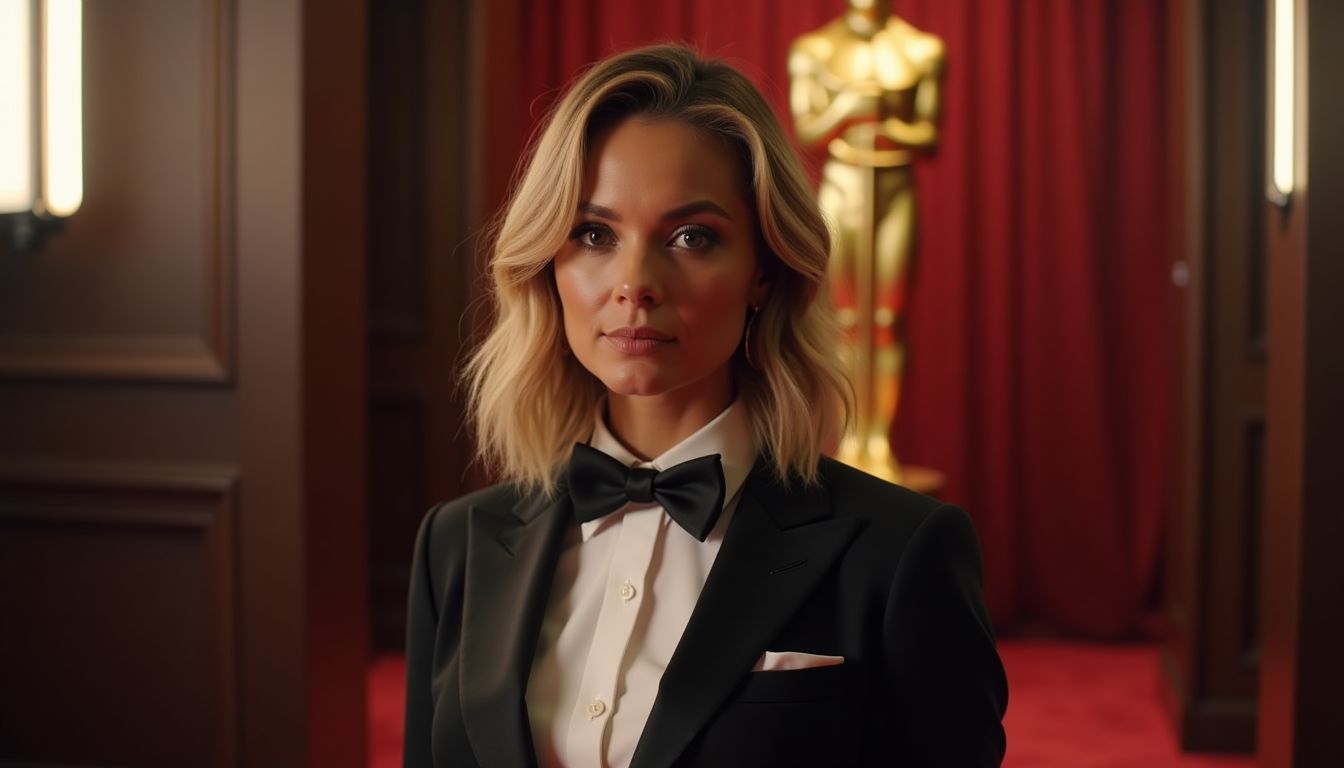
So here's the thing about Sean Penn skipping the Oscars to go to Ukraine — it's the kind of move that cuts right through the noise in a way that very little does anymore. While the entertainment industry was busy polishing trophies and rehearsing acceptance speeches, Penn was physically putting himself in one of the most dangerous places on Earth. That contrast alone is almost impossible to ignore, and it forces a pretty uncomfortable question for the rest of us: what are we actually doing with our moment?
Penn has always been Hollywood's designated chaos agent — the guy who makes other celebrities look like they're playing it safe, because honestly, they are. But this isn't just celebrity-being-edgy territory. Ukraine represents one of the most significant geopolitical crises of our generation, a real-time reminder that large-scale war in Europe isn't just a history book concept. When a recognizable face voluntarily walks into that reality instead of sitting in a velvet chair waiting for his name to be called, it lands differently than a strongly worded tweet ever could.
There's also something deeply cinematic about the imagery itself, and people are responding to that whether they consciously realize it or not. The Oscars — glamour, gowns, champagne — happening simultaneously with missile strikes and displacement camps is already a jarring split-screen. Penn collapsing that distance by simply choosing one over the other creates a moment that feels like it belongs in one of his films. It's visceral, it's symbolic, and it requires zero explanation. The visual storytelling does all the work.
It also taps into a growing exhaustion with performative activism. People are increasingly sharp at detecting when concern is a costume rather than a conviction. Penn showing up in person, with cameras documenting a documentary he was filming about the conflict, sidesteps that cynicism almost entirely. You can debate his politics, question his methods, or find him insufferable at dinner parties — but you genuinely cannot accuse this particular act of being performative when the performance would have been sitting at the Dolby Theatre.
The timing matters enormously too. The invasion of Ukraine landed in the global consciousness as this shocking, almost surreal rupture in what people assumed the modern world looked like. Months in, there's a very human tendency to look away, to let the urgency fade into background noise as life keeps moving. Penn's presence — and the visibility of that presence — functions as a kind of recalibration. It's a reminder that the crisis didn't politely resolve itself just because our attention drifted elsewhere.
What makes this moment genuinely stick is that it merges two worlds that rarely intersect authentically — celebrity culture and geopolitical reality — and it does so without a PR strategy or a ribbon to wear. There's no product to sell, no brand partnership, no calculated moment designed for a specific audience. It's just a deeply flawed, deeply committed person making a choice that most people with far less to lose wouldn't make. And in a media landscape absolutely saturated with curated personas and safe messaging, that raw, unpolished decision-making hits like a splash of cold water. Whether you admire Sean Penn or find him exhausting, this particular move earns a second look — and that, more than anything, is why it captured the cultural imagination so completely.