
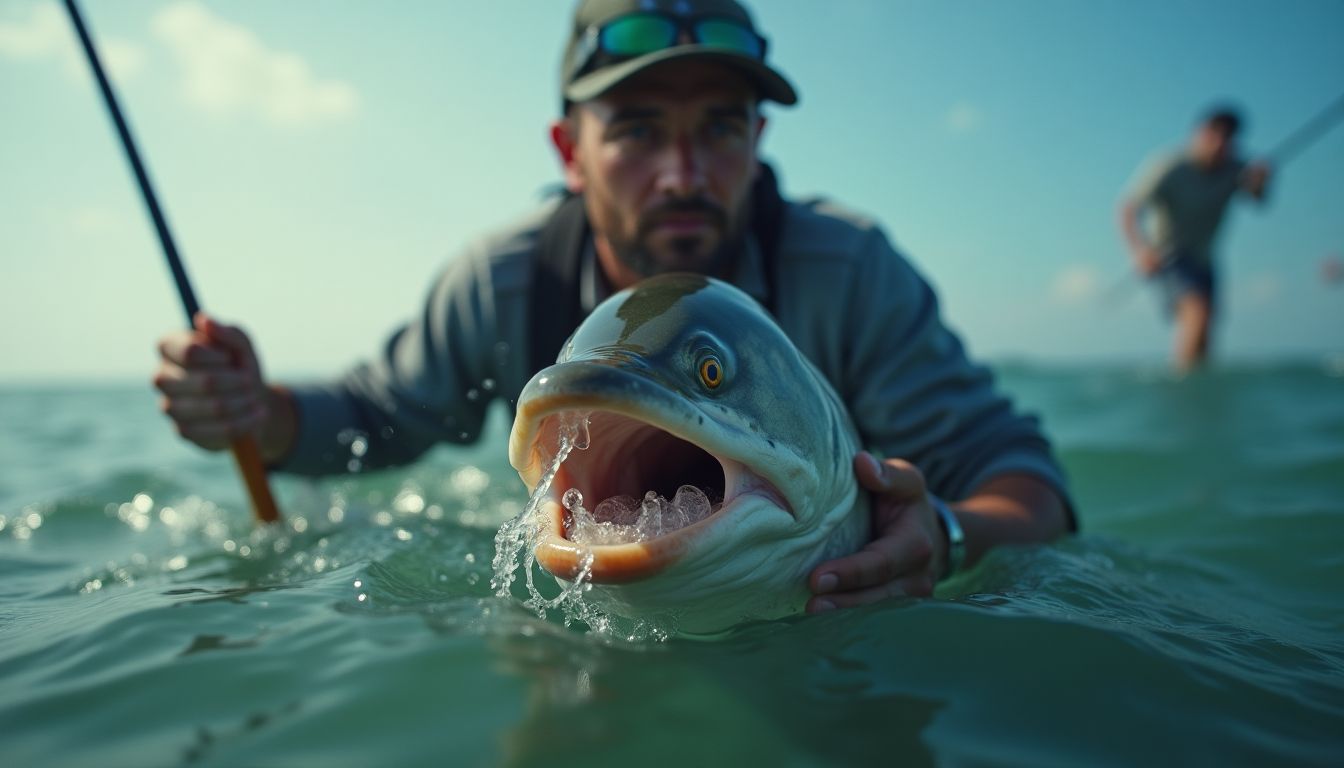
Here's why this hits so hard. We live in this weird era where witnessing something has almost replaced participating in it. There's a whole psychological phenomenon around it — the bystander effect on steroids, turbocharged by the dopamine loop of getting likes for documenting other people's moments. So when someone just... doesn't do that? When someone opts for action over content creation? It feels almost radical. It feels like a plot twist in a movie where we forgot that was even an option.
The fish part is also doing serious heavy lifting here. Think about it — this isn't a puppy or a baby or something that society has a pre-installed empathy response for. It's a fish. A creature that most people wouldn't think twice about. Yet this guy extends the same urgency and care he'd give to something "worth saving." That's a quietly profound statement about the value of life, and people are feeling it even if they can't immediately articulate why. It expands the circle of compassion in a way that sneaks up on you.
There's also something deeply satisfying about the anonymity here. We don't know this guy's name, his follower count, or whether he has a merch store. He's just a dude. In a landscape absolutely saturated with performative virtue — where every good deed comes with a ring light and a caption — this story carries the rare scent of something genuine. The fact that someone else had to capture it, rather than him documenting himself, is kind of the whole point. He wasn't playing to any audience. He was just being decent.
The timing matters too. We're collectively exhausted by the sense that caring about things is somehow a brand strategy now. Every cause, every emotional moment, every act of kindness seems to pass through a filter of "but what's this person getting out of it?" This story sidesteps all of that. It's refreshingly uncomplicating. A thing needed help. A person helped it. Full stop. No sponsorship, no story arc, no follow for more wholesome content.
What makes this moment culturally sticky is that it's essentially a mirror. It makes you ask yourself — honestly, without judgment — what you would have done. Would you have grabbed your phone? Would you have worried about the fish slipping, about looking weird, about ruining your shoes? Most of us would probably answer that question a little uncomfortably, and that discomfort is exactly where the viral magic lives. The best stories don't just show you something cool — they show you something about yourself.
Ultimately, this random fish-saving guy has accidentally become a symbol for something people are quietly hungry for: the idea that ordinary moments of genuine action still exist, and still matter. He didn't save a person from a burning building. He didn't make headlines for a massive charitable donation. He just saw something struggling and used his hands instead of his camera. And somehow, in the context of right now, that's exactly the kind of heroism that feels most urgent. Small, unglamorous, and completely real.