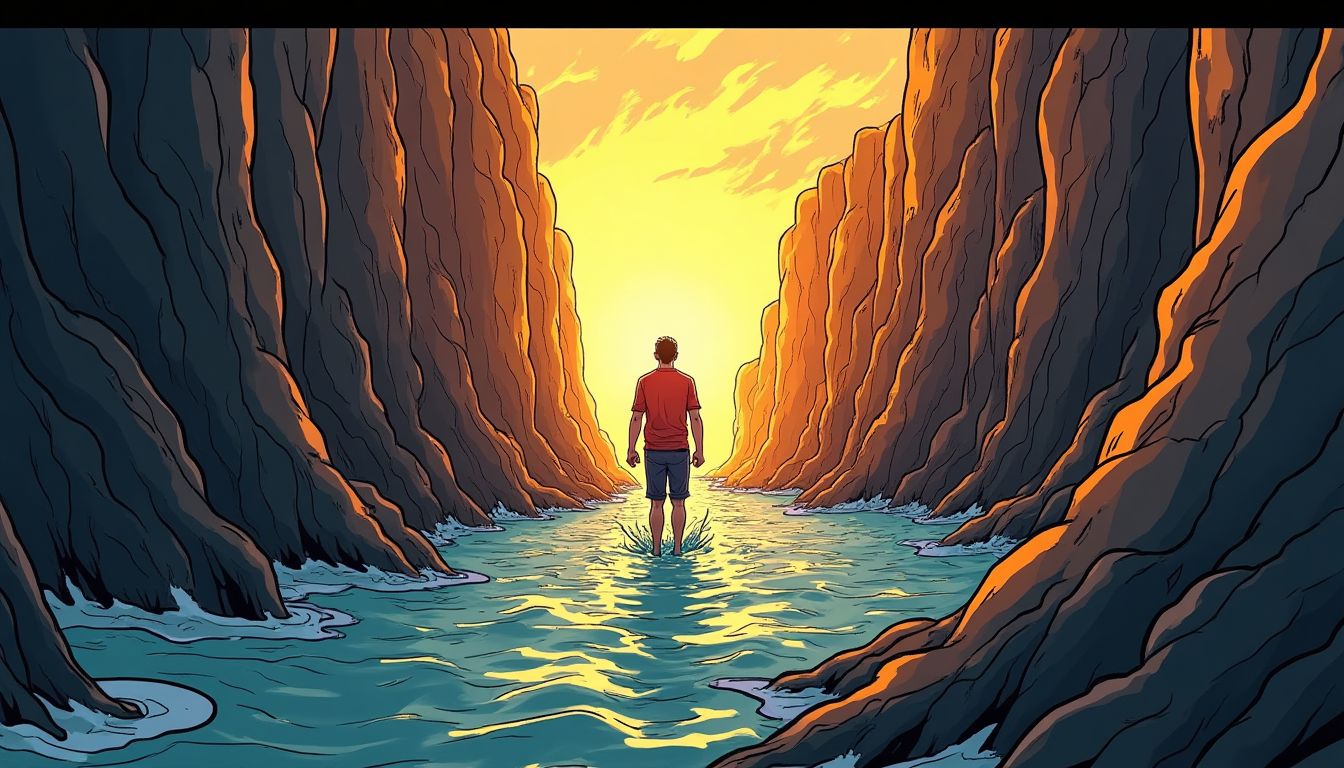
There's something deliciously universal about the concept of "The Ultimate Challenge." Whether it's a comic strip, a meme format, or a simple illustrated scenario, the idea of being pushed to your absolute limit hits a nerve that feels almost primal. We live in an era of constant self-optimization, hustle culture glorification, and the creeping anxiety that we're somehow never quite doing enough. So when a comic nails that feeling of being confronted with something impossibly hard, people don't just laugh — they feel genuinely seen.
Think about what a "challenge" means culturally right now. We're surrounded by them — fitness challenges, productivity challenges, 30-day this and 75-hard that. The word itself has been so weaponized by wellness culture and corporate motivation speak that it's become almost comically loaded. A comic strip that plays with that tension — the gap between how challenges are hyped up and how they actually feel in the moment — is essentially holding a mirror up to a very specific kind of modern exhaustion that a lot of people carry quietly.
What makes comics such a powerful vehicle for this kind of resonance is the compression. A great comic strip does in four panels what a think-piece takes 2,000 words to accomplish. It identifies a feeling, frames it in an absurd or exaggerated way, and delivers a punchline that recontextualizes the whole thing. When that formula works, the reaction isn't just "ha, funny" — it's "oh wow, that's exactly it." That moment of recognition is basically social currency. People share things that make them feel understood, and sharing that thing becomes a way of saying "I feel this too, do you?"
There's also something worth noting about timing. We're at a cultural moment where the mythology of pushing through, grinding harder, and conquering every obstacle is starting to crack a little. Younger generations especially are increasingly skeptical of the idea that suffering through challenges is inherently noble. So a comic that playfully interrogates or lampoons the very concept of "the ultimate challenge" lands differently now than it might have five years ago. It's not cynical — it's cathartic.
The genius of comic art in particular is that the visual simplicity creates accessibility. You don't need context, background knowledge, or even language fluency sometimes. The format welcomes everyone into the joke instantly, which means the audience pool is enormous. And when something is both universally accessible AND emotionally specific, that's the sweet spot where things genuinely catch fire culturally. It feels personal AND collective at the same time — a rare combo.
Ultimately, what "The Ultimate Challenge" taps into is one of the most human questions there is: what are we actually capable of, and who gets to decide what counts as enough? Comics have been asking that question in clever, sideways ways since newspaper funny pages existed. The format endures because the anxiety never really goes away — it just wears different clothes in different eras. Right now, those clothes look a lot like hustle culture aesthetics, productivity apps, and the quiet dread of falling behind. A great comic strip gives that dread a punchline, and suddenly it feels just a little bit lighter.