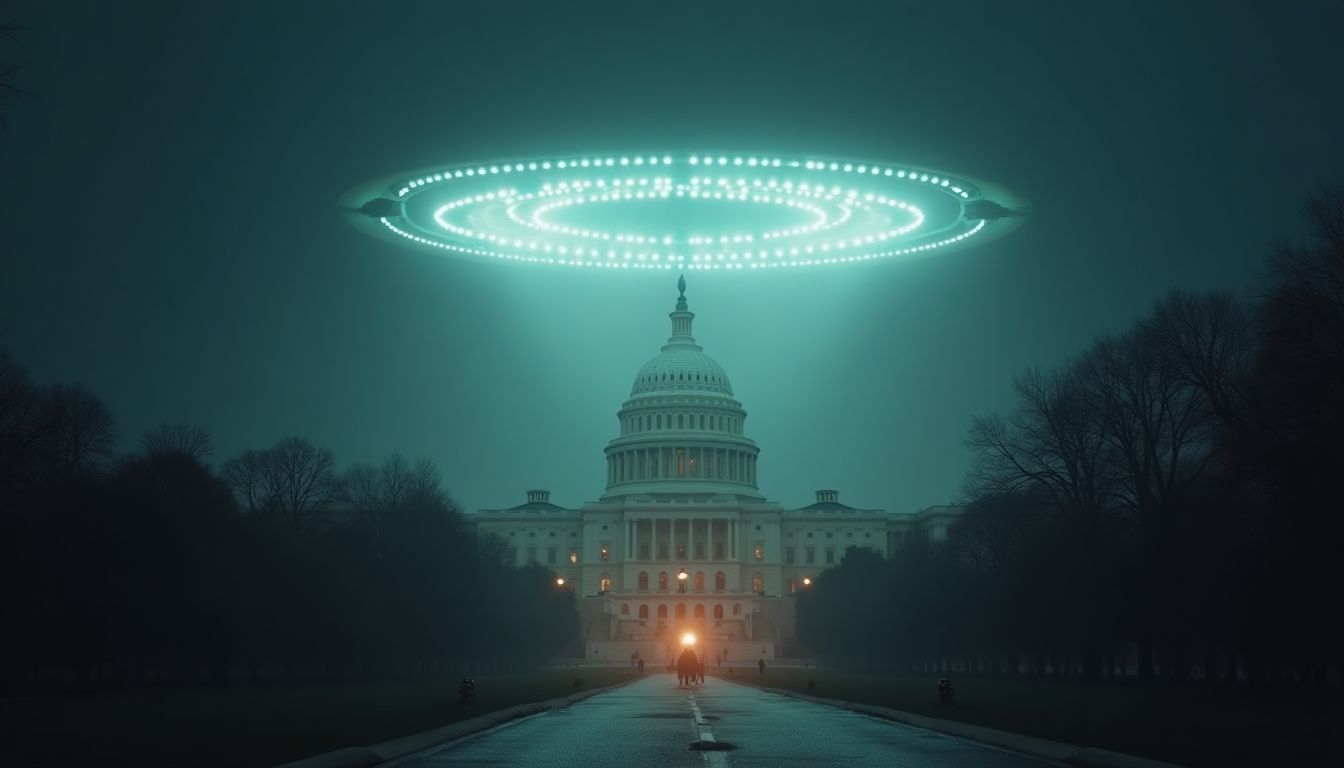
So here's a concept that will absolutely wreck your afternoon in the best possible way. The Dark Forest Hypothesis suggests that the reason we haven't heard from alien civilizations isn't because they don't exist — it's because they're all hiding. Desperately, strategically, silently hiding. The universe, according to this theory, is essentially a pitch-black forest full of armed hunters, and the absolute worst thing you can do is make noise. Sound familiar? It should, because it maps perfectly onto some very human anxieties.
The timing of this theory hitting the cultural conversation is no accident. We're living in a moment of peak geopolitical paranoia, where trust between major powers is at historic lows and the phrase "strategic ambiguity" gets thrown around in international relations like it's going out of style. The Dark Forest taps directly into that collective nervousness about visibility, vulnerability, and what happens when you show your hand too early. It's essentially cold war theory applied to the entire cosmos, and that hits differently when the real world feels increasingly adversarial.
There's also something deeply psychological about why this resonates. Humans are wired for threat detection, and the Dark Forest reframes the classic "are we alone?" question into something far more unsettling — "are we being watched right now, and should we shut up?" That shift from hopeful curiosity to existential dread is genuinely compelling storytelling, even when it's science. The theory was popularized by Chinese author Liu Cixin in his legendary Remembrance of Earth's Past trilogy, which has quietly become one of the most influential sci-fi works of the 21st century, and its ideas are now seeping into mainstream consciousness in a big way.
What makes this moment particularly unique is that we're not just theorizing anymore — we're actually sending signals into space. Projects like METI (Messaging Extraterrestrial Intelligence) are actively broadcasting humanity's location, and serious scientists are genuinely divided about whether that's brave or catastrophically stupid. Stephen Hawking famously warned against it. The Dark Forest Hypothesis gives that debate a terrifying philosophical backbone. Suddenly it's not just a nerdy argument about radio waves; it's an argument about species-level survival strategy.
There's also a social mirror happening here that people instinctively recognize. The idea that showing weakness or revealing too much information makes you a target? That's not just cosmic — that's Tuesday on the internet, in the boardroom, in geopolitics. The Dark Forest works as a metaphor for modern life in a way that feels almost uncomfortably accurate. We live in an age of radical transparency being weaponized, of oversharing having real consequences, of visibility being both power and vulnerability simultaneously.
And honestly, the sheer narrative elegance of the hypothesis is part of the magic. It solves the Fermi Paradox — the nagging question of why a universe so vast and old seems so suspiciously quiet — with a single, chilling answer: they're quiet because they learned what happens when you're not. It's the kind of idea that lodges itself in your brain and refuses to leave, the intellectual equivalent of a horror movie you can't stop thinking about. That's the hallmark of a truly viral idea — not just interesting, but genuinely difficult to shake once you've encountered it.
The Dark Forest Hypothesis is resonating right now because it's doing what the best ideas always do — it's holding up a mirror to our present anxieties and projecting them onto the grandest possible canvas. It turns out the universe might operate by the same brutal logic as every power struggle in human history. And somehow, that's both terrifying and deeply, uncomfortably satisfying to contemplate.