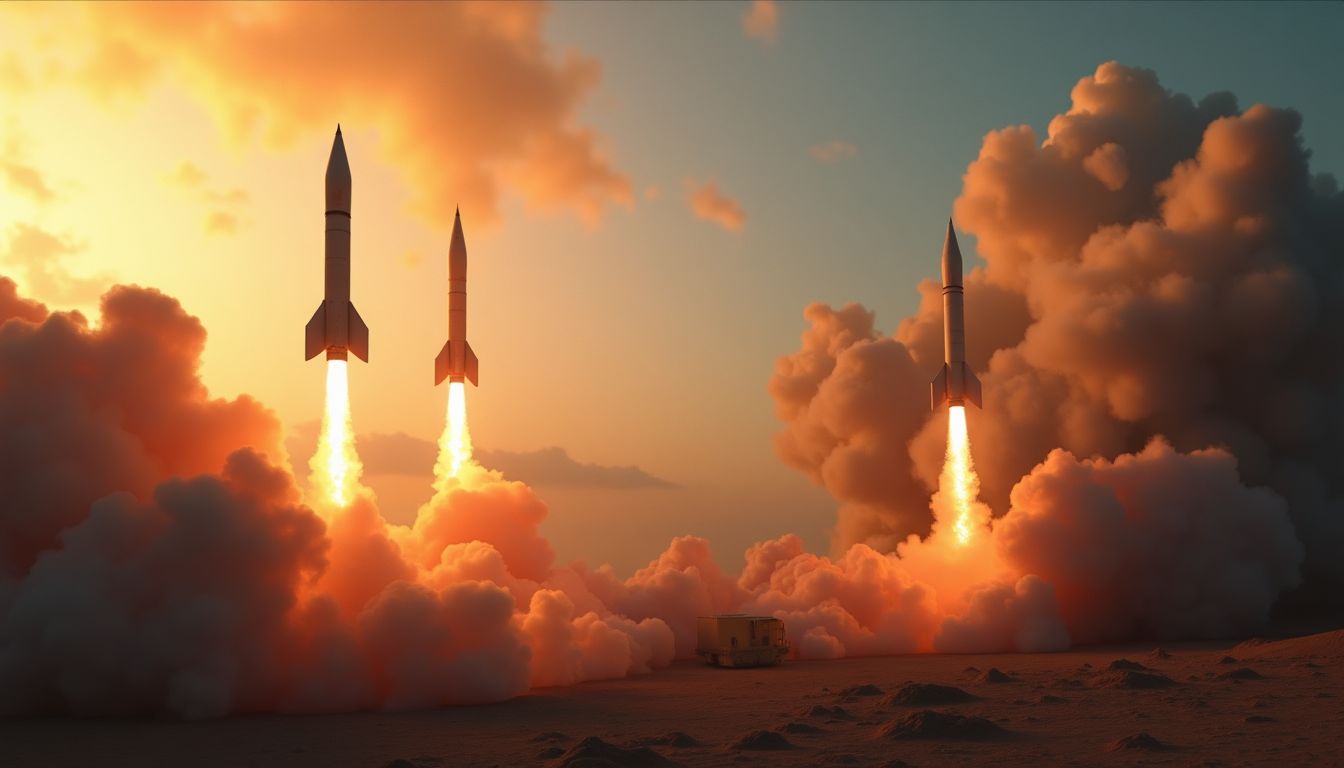
The reason this one lands so hard right now is the timing. Trump had been floating the idea of negotiations, which gave a lot of people a brief, cautious exhale. That tiny window of "maybe things cool down" is incredibly powerful psychologically. When that window gets slammed shut by missile strikes and a blunt "fake news" dismissal from Tehran, the emotional whiplash hits harder than if there had been no diplomatic overture at all. Hope deferred makes the heart sick, and hope exploded makes people furious and fascinated.
There's also something uniquely uncomfortable about watching two incompatible realities play out in real time. On one side, an American president suggesting dialogue is possible. On the other, a government responding with ballistic missiles and calling the whole premise a lie. This isn't just a foreign policy disagreement — it's a fundamental crisis of credibility. And in a world already drowning in "fake news" accusations from every direction, having Iran deploy that exact phrase feels almost darkly theatrical.
The cultural weight here goes deeper than the immediate conflict. People are acutely aware that we're living in a period where multiple major wars are active simultaneously — a genuinely unusual situation in modern memory. There's a low hum of anxiety that this particular flashpoint between Iran and Israel, two countries with nuclear-adjacent tensions and deeply ideological leadership, could spiral in ways that other conflicts haven't. People aren't just watching the news cycle, they're doing quiet mental math about worst-case scenarios.
What makes this moment especially gripping is the layered cast of characters. You've got Israel, already operating in a heightened war footing. You've got Iran, projecting defiance while its regional proxies have taken serious hits recently. And then you've got Trump, whose foreign policy approach is famously unpredictable, swinging between deal-making instincts and maximum pressure tactics. When these three forces interact, you genuinely cannot script what happens next — and humans are hardwired to fixate on uncertainty, especially when the stakes are this high.
The "fake news" framing from Iran is also doing a lot of social heavy lifting. That phrase carries enormous cultural baggage at this point — it's been weaponized by politicians across the ideological spectrum globally, and hearing it deployed by Tehran in this context creates a strange, uncomfortable moment of recognition. It's jarring in a way that a more traditional diplomatic denial wouldn't be. It makes the whole situation feel simultaneously familiar and deeply surreal.
Ultimately, this story captures attention because it sits at the intersection of everything people are already anxious about — geopolitical instability, credibility of leaders, the fragility of peace gestures, and the very real possibility of catastrophic escalation. It's not abstract. Missiles are concrete. Dismissals are concrete. And the gap between what leaders say and what actually happens is a gap that affects real human lives at a scale that's genuinely hard to process. That combination of immediacy, stakes, and narrative tension is exactly why this story cuts through the noise when so much else doesn't.