
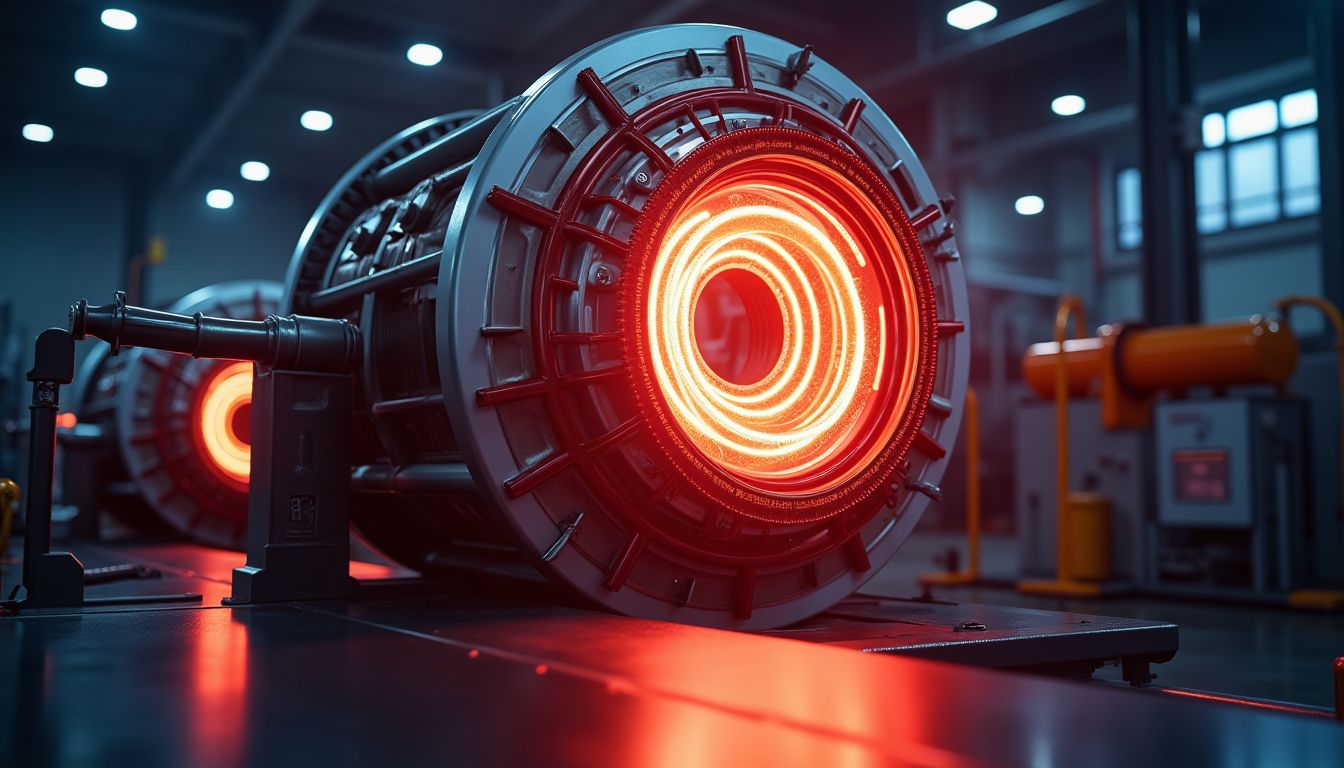
The United Kingdom has awarded a £70 million ($95 million) contract to Tokamak Energy to develop advanced magnet systems for the country's STEP fusion reactor program, marking a major milestone in Britain's pursuit of fusion energy technology.
The contract with Tokamak Energy, a UK-based fusion technology company, will focus on advancing magnetic confinement systems that are critical to the operation of fusion reactors. These powerful magnets are essential for containing the superheated plasma needed to sustain fusion reactions.
STEP Fusion Program Background
The Spherical Tokamak for Energy Production (STEP) represents the UK's flagship fusion energy program, designed to demonstrate the commercial viability of fusion power. The program aims to build a prototype fusion power plant that could generate electricity for the grid.
Fusion energy works by combining light atomic nuclei at extremely high temperatures, potentially providing a clean and virtually limitless energy source. However, the technology requires sophisticated magnetic systems to contain plasma heated to over 100 million degrees Celsius.
Tokamak Energy's Role
Tokamak Energy specializes in developing high-temperature superconducting magnets and spherical tokamak technology. The company's approach focuses on creating more compact fusion reactors compared to traditional designs, potentially making fusion power more commercially viable.
The magnet systems being developed under this contract will need to withstand extreme conditions while maintaining precise magnetic field control necessary for stable fusion reactions. These superconducting magnets represent some of the most advanced magnetic technology currently being developed.
UK Fusion Strategy
This contract award demonstrates the UK government's continued investment in fusion technology as part of its broader energy security and net-zero emissions strategy. The funding reflects Britain's commitment to becoming a leader in fusion energy development alongside international competitors.
The STEP program is part of a global race to achieve commercially viable fusion power, with projects underway in the United States, Europe, and Asia. Success in fusion technology could transform global energy production and help address climate change challenges.