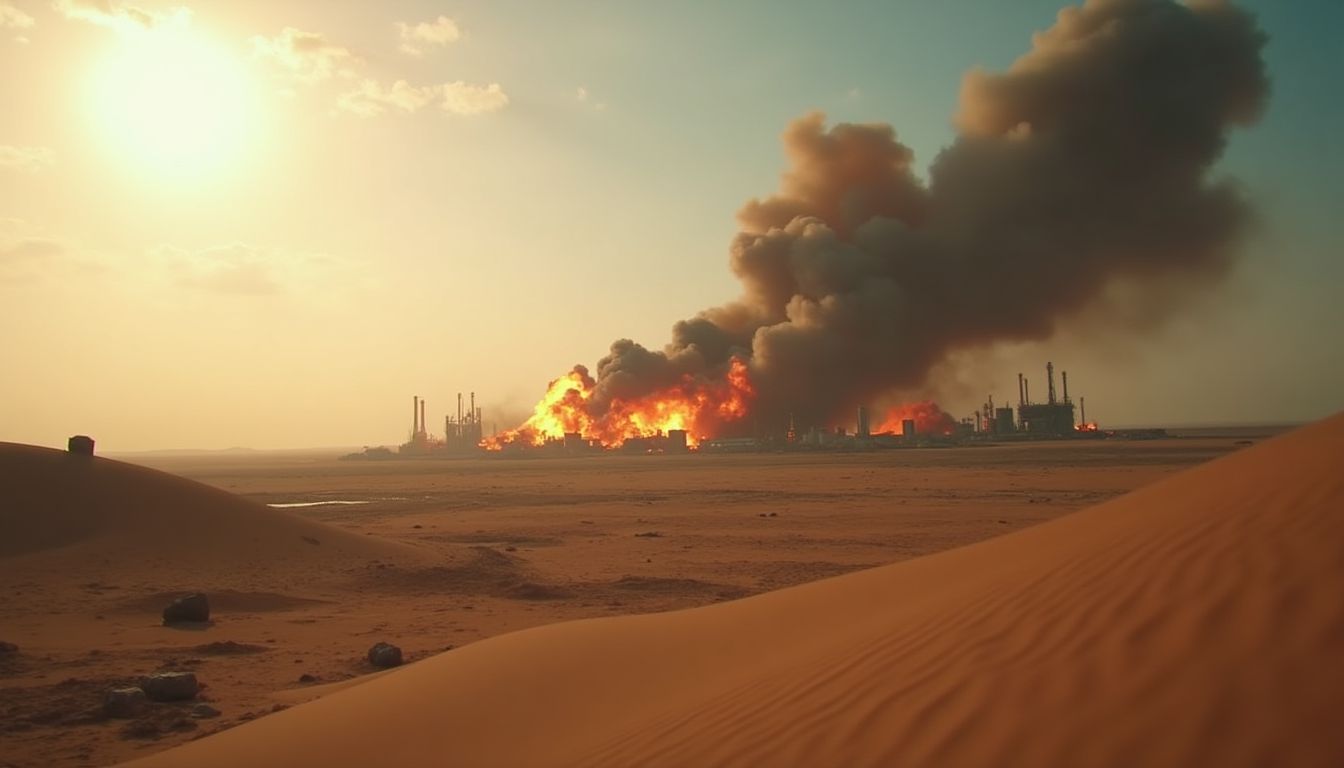
Iran launched attacks on oil production facilities across multiple Gulf states for a second consecutive day, targeting infrastructure in Qatar, Saudi Arabia, the United Arab Emirates and Kuwait as regional tensions continue to escalate.
The strikes represent a significant expansion of Iran's military response, hitting energy infrastructure across four major Gulf nations that are key players in global oil markets.
U.S. President Trump had previously ordered Israel not to attack Iran's South Pars facility, according to the report, as part of efforts to de-escalate the spiraling conflict in the region.
Regional Energy Infrastructure Under Attack
The targeting of oil production facilities across multiple Gulf states marks a notable escalation in the current conflict, with Iran directing military action against critical energy infrastructure that serves as the economic backbone of these nations.
Qatar, Saudi Arabia, the United Arab Emirates and Kuwait collectively represent some of the world's largest oil and natural gas producers, making attacks on their energy facilities a matter of global economic concern.
De-escalation Efforts
Despite the ongoing strikes, there have been attempts to contain the conflict's expansion. President Trump's directive to Israel regarding Iran's South Pars facility indicates ongoing diplomatic efforts to prevent further escalation of the regional crisis.
South Pars is one of Iran's most significant energy assets, representing a major natural gas field that serves as crucial infrastructure for the country's energy sector.
The contrast between these de-escalation attempts and Iran's continued strikes on Gulf state facilities highlights the complex dynamics at play in the current regional conflict.