Trump Signs Sweeping Executive Order to Crush Transnational Cybercrime Networks
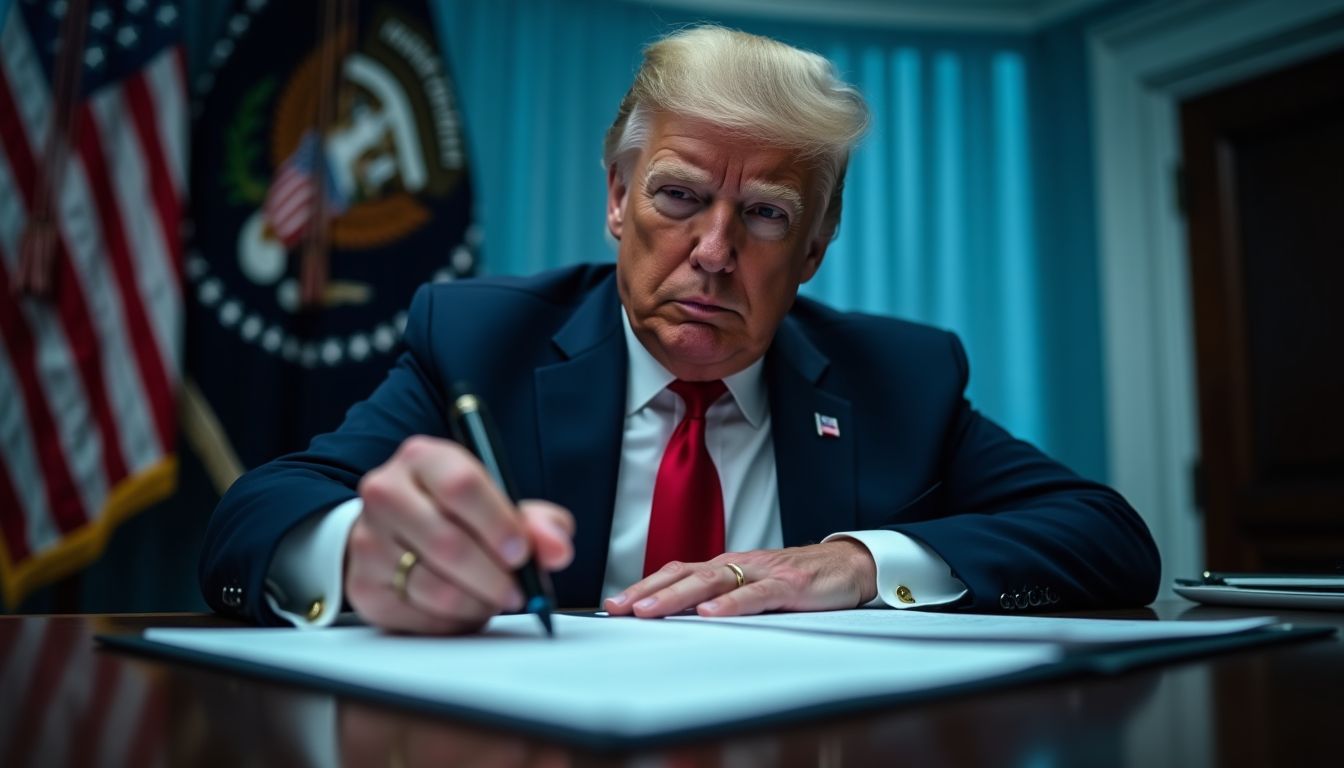
President Donald Trump signed a landmark Executive Order on Tuesday directing federal agencies to develop and deploy aggressive countermeasures against transnational criminal organizations leveraging cyberspace to attack American interests, businesses, and infrastructure. The move signals a major escalation in Washington's war on international digital crime.
What the Executive Order Actually Does
The EO instructs senior officials across multiple federal departments — including the Department of Justice, the Department of Homeland Security, and U.S. Cyber Command — to identify the most robust available tools to disrupt, dismantle, and deter criminal networks operating across international borders. Officials have been given a defined window to present actionable strategies and technologies capable of countering these threats at scale.
Sources close to the administration say the order specifically targets criminal syndicates operating out of Eastern Europe, Southeast Asia, and Latin America — regions that have long served as breeding grounds for ransomware gangs, financial fraud networks, and state-sponsored hacking collectives that operate with near impunity behind weak extradition frameworks.
"The United States will no longer tolerate foreign criminal enterprises using the internet as a weapon against our citizens and our economy," a senior White House official told reporters following the signing. "This Executive Order puts the full force of the federal government on notice — we are going on offense."
The Scale of the Problem
The timing of the EO is no coincidence. Cybercrime costs the U.S. economy an estimated $452 billion annually, according to figures cited by the Council of Economic Advisers. Ransomware attacks alone surged by 74% in 2024, crippling hospitals, school districts, and critical infrastructure operators from coast to coast. High-profile incidents, including attacks on the Change Healthcare system that disrupted prescription services for millions of Americans, have made cybercrime a kitchen-table issue for ordinary citizens.
Transnational criminal organizations have increasingly blurred the line between traditional organized crime and cyber operations, using cryptocurrency laundering, deepfake fraud schemes, and sophisticated phishing operations to extract billions from American businesses and government agencies every year.
Broad Federal Mobilization Expected
Under the directive, the FBI's Cyber Division, the Cybersecurity and Infrastructure Security Agency (CISA), and the Secret Service's financial crimes units are all expected to receive expanded mandates and potentially increased funding allocations to support the initiative. The NSA and U.S. Cyber Command are also anticipated to play a larger offensive role under the new framework.
Cybersecurity policy experts say the EO could pave the way for more aggressive "hack-back" operations — a long-debated strategy that would allow U.S. agencies to proactively penetrate and disrupt foreign criminal infrastructure before attacks reach American shores.
"This is a paradigm shift," said Dr. James Carver, a former DHS cybersecurity adviser. "Previous administrations largely played defense. If this order translates into real operational authority, we could see the U.S. conducting coordinated takedowns of criminal networks on a scale we've never seen before."
Political and International Implications
The Executive Order is also expected to have significant diplomatic dimensions. The Trump administration is likely to use the directive as leverage in negotiations with countries that have historically sheltered cybercriminals, warning of potential sanctions or trade consequences for governments that fail to cooperate with U.S. extradition and prosecution requests.
Critics, however, warn that without Congressional oversight, expanded offensive cyber capabilities carry serious risks of escalation, particularly with nations like Russia and China whose governments maintain murky relationships with criminal hacking groups.
The administration has not yet released the full text of the Executive Order, but a White House fact sheet is expected before the end of the week. Federal agencies have reportedly been given 90 days to submit their recommended action plans.