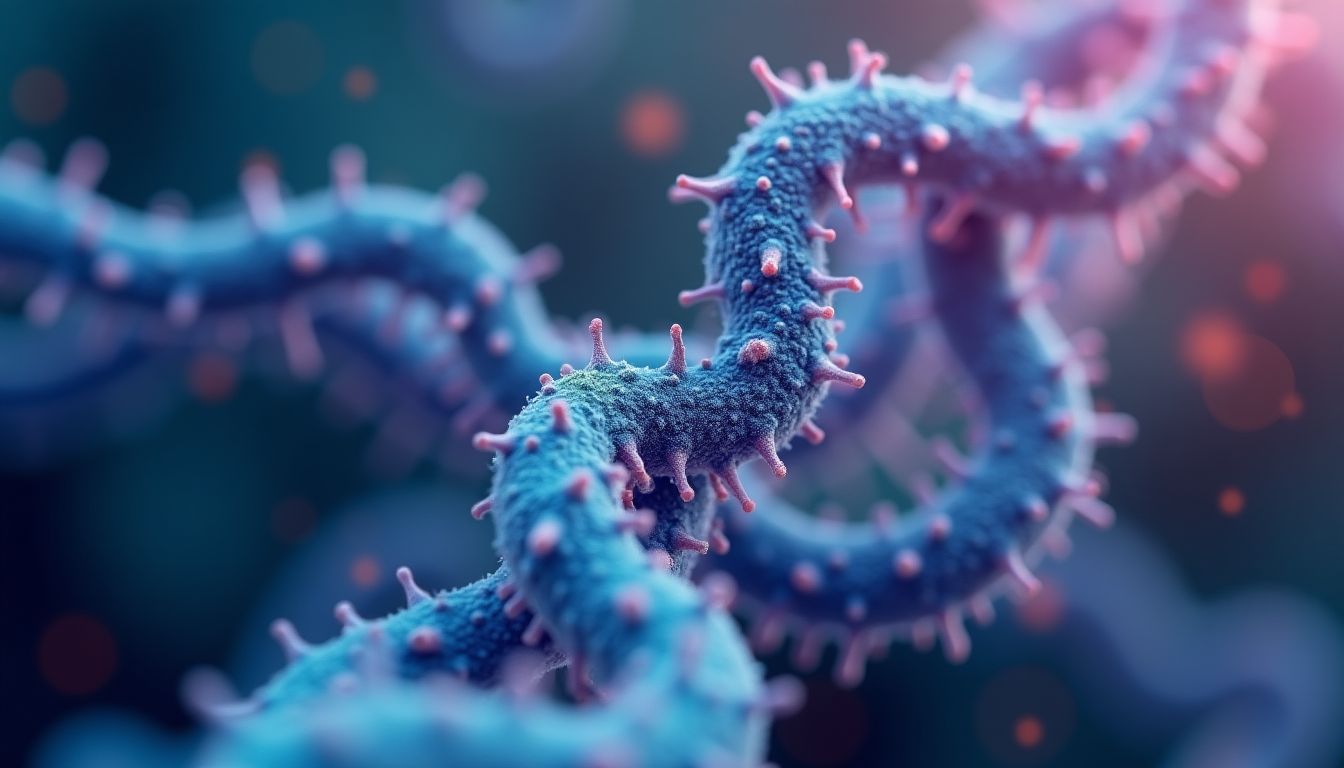
Researchers have identified the precise molecular mechanism by which SMC (Structural Maintenance of Chromosomes) proteins enable bacteria to accurately separate their DNA during cell division, a discovery that sheds new light on how single-celled organisms maintain genomic stability without the complex machinery found in human cells. Unlike human cells, which rely on mitosis and spindle construction to divide genetic material, bacteria employ a fundamentally different process known as binary fission. The new findings clarify how SMC proteins serve as the central drivers of this process, actively compacting chromosomes and generating repulsive forces that push replicated DNA strands apart.
The study details how SMC proteins work by condensing newly replicated bacterial chromosomes into tightly organized structures, a physical compaction that is essential for ensuring each daughter cell receives a complete and accurate copy of the genome. This compaction is not merely structural — researchers found that the proteins also generate mechanical repulsive forces between the two chromosome copies, effectively pushing them toward opposite ends of the bacterial cell. Without this dual function of compaction and repulsion, chromosome segregation becomes disordered, leading to errors in cell division that can compromise bacterial survival and reproduction.
Scientists noted that the SMC protein complex operates in a highly coordinated manner, moving along the length of the chromosome in a process that is tightly coupled to DNA replication itself. This coordination ensures that separation begins almost simultaneously with duplication, preventing the two chromosome copies from becoming entangled. The research highlights that disruptions to SMC protein function result in significant genomic instability, underscoring its critical role in bacterial cell biology.
The implications of this discovery extend beyond basic microbiology. Because SMC proteins are conserved across many species — including versions found in human cells — a deeper understanding of their bacterial function may offer insights into broader questions of chromosome organization and cell division across all domains of life. Researchers suggest that targeting SMC protein mechanisms could also present a potential avenue for developing new antibacterial strategies, given that impairing proper chromosome segregation would be lethal to bacterial cells.
The findings contribute to a growing body of research aimed at understanding the molecular machinery that governs bacterial replication, an area of increasing scientific and medical interest. As antibiotic resistance continues to pose a global health challenge, identifying fundamental biological processes unique to or critically important in bacteria becomes increasingly relevant. Scientists say further research will be needed to fully map the precise structural interactions of SMC proteins during each stage of binary fission and to determine how environmental factors may influence their activity.