
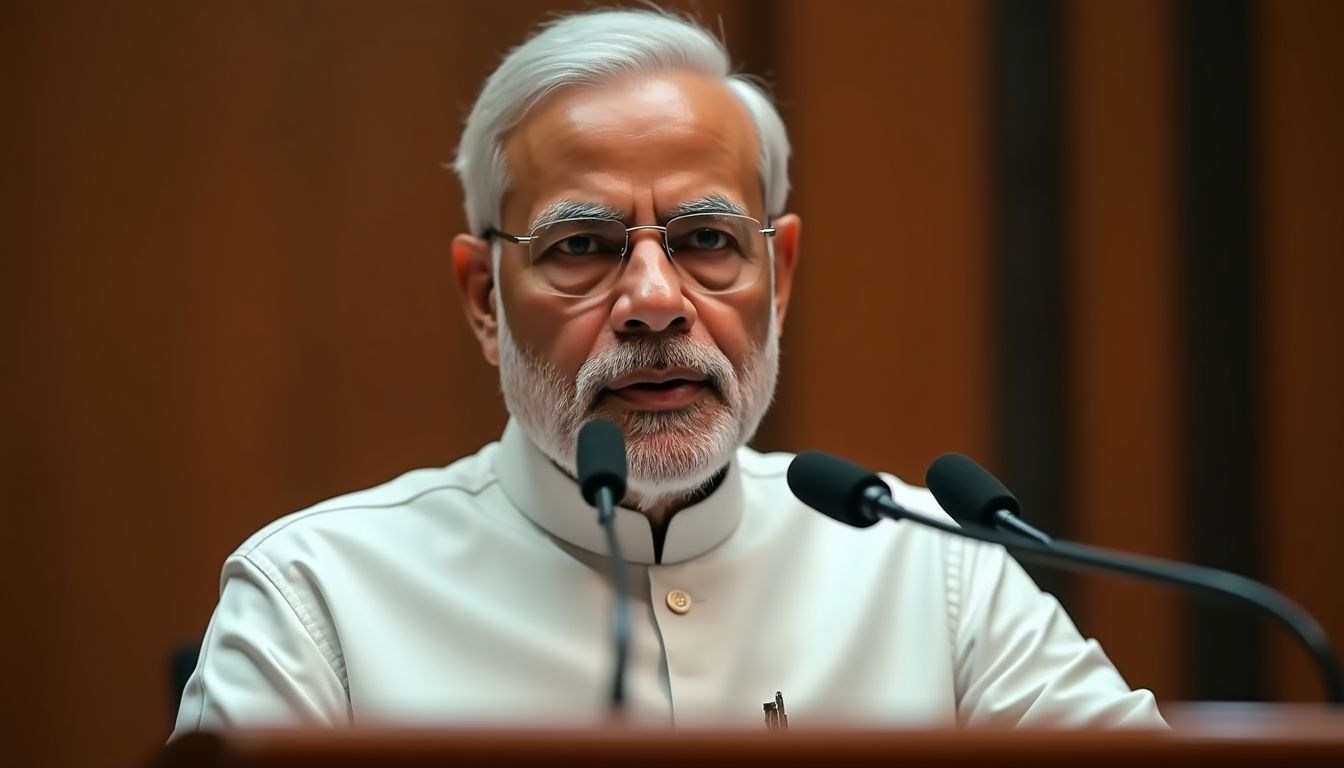
Prime Minister Narendra Modi addressed the Lok Sabha on Monday, outlining India's official position on the escalating crisis in West Asia following joint military strikes by the United States and Israel on Iran that began on February 28. Modi described the situation as "worrisome" and signaled that New Delhi is closely monitoring developments in the region. The address marked the government's most comprehensive public statement on the conflict to date.
A central concern raised by the Prime Minister was the potential disruption to shipping traffic through the Strait of Hormuz, one of the world's most critical oil transit chokepoints. Modi warned that any interference with passage through the strait would have direct and significant consequences for India's energy security and economy. Roughly 20 percent of global oil supplies pass through the Hormuz corridor, and India, as one of the world's largest oil importers, is particularly vulnerable to supply shocks originating from the region.
Modi used the parliamentary address to clarify India's stance on the conflict, reaffirming New Delhi's longstanding policy of non-alignment and its commitment to diplomatic resolution of international disputes. India has substantial strategic and economic interests across the Gulf region, including a large diaspora workforce and significant bilateral trade relationships with multiple nations directly affected by the conflict. The Prime Minister emphasized that India's priority remains the safety and well-being of Indian nationals currently residing in conflict-affected areas.
The crisis was triggered on February 28 when U.S. and Israeli forces launched coordinated strikes against Iran, drawing the Gulf region into a broader military confrontation. The attacks have raised international alarm about the potential for the conflict to escalate further and destabilize a region critical to global energy markets and trade routes. Several countries have called for an immediate ceasefire and the resumption of diplomatic dialogue.
India imports a significant share of its crude oil from Gulf nations and has historically maintained strong diplomatic ties with both Iran and other key regional players, placing New Delhi in a delicate diplomatic position as the conflict deepens. The government has reportedly activated contingency planning for potential disruptions to oil supplies and is monitoring the situation through its diplomatic missions in the region. Officials have not yet confirmed any formal evacuation plans for Indian nationals, though the government stated it remains prepared to act swiftly if circumstances require.
Modi's address to the Lok Sabha underscored the growing pressure on the Indian government to take a clearer public stance as the conflict continues to evolve. Opposition members have pressed the ruling government for detailed information on India's diplomatic outreach and contingency measures. The Prime Minister's remarks are expected to be followed by further briefings to parliamentary committees in the coming days as the situation in West Asia develops.