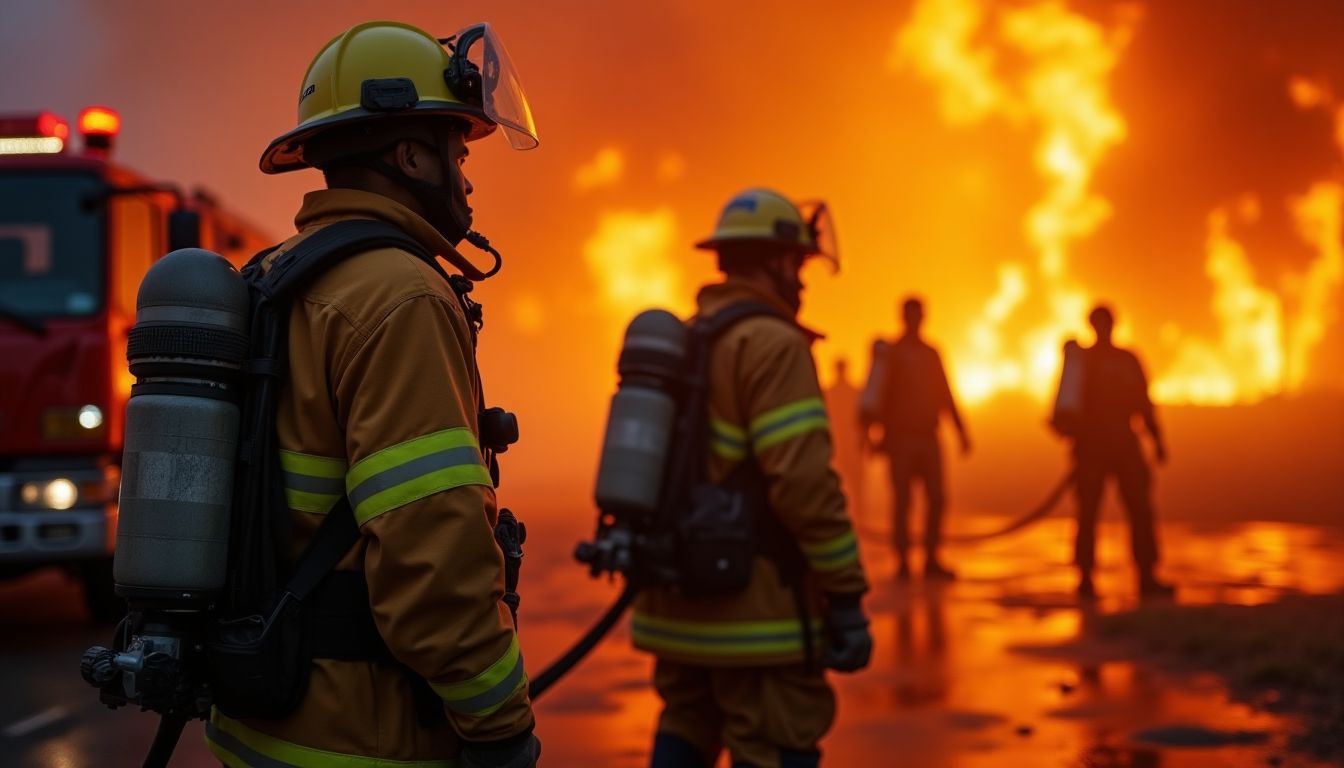
Here's a fun fact that won't make it into any recruitment brochures: becoming a firefighter means trading roughly a decade of your life for the privilege of running toward burning buildings while everyone else runs away. According to health experts, firefighters face a 10-year shorter lifespan than the general population. It's the kind of statistic that makes you wonder if we've created a society where heroism literally has a shelf life.
Now, before you start thinking this is just another occupational hazard story, consider the delicious irony at play here. We've built a civilization so complex and dangerous that we need specialists whose job description essentially reads: "Risk your life repeatedly so others can sleep soundly." Then we act surprised when this arrangement comes with consequences. It's like being shocked that professional stunt drivers have more insurance claims than librarians.
The culprits behind this grim math are depressingly predictable. Cancer rates among firefighters are through the roof – quite literally, given where they spend their time. Cardiovascular disease stalks them like a persistent debt collector. Respiratory issues accumulate with each smoke-filled rescue. Mental health challenges compound as they witness humanity's worst moments on repeat. It's occupational Russian roulette, except all the chambers are loaded, just with different calibers of misery.
What's particularly maddening is how we've normalized this trade-off. We pin medals on firefighters, name streets after the fallen, and feel good about honoring their sacrifice. But somehow, we've accepted that sacrifice must include their actual lifespan, as if early death is just part of the job description filed somewhere between "must be physically fit" and "comfortable working in extreme temperatures."
The toxic soup firefighters wade through would make a chemistry professor weep. Modern fires aren't just wood and paper anymore – they're cocktails of synthetic materials, plastics, and chemicals that create carcinogenic clouds. Every house fire is now a mobile Superfund site. Yet we send firefighters in with equipment designed for a simpler era, when the biggest worry was getting singed, not developing mesothelioma twenty years later.
Here's where human psychology gets wonderfully predictable. We'll spend billions on military equipment to protect soldiers from foreign threats, but struggle to fund proper protective gear and health monitoring for firefighters facing domestic dangers daily. We'll debate endlessly about airport security theater while firefighters work in conditions that would shut down any factory for safety violations. It's as if we've decided that some heroes deserve better protection than others based on which threats make for more compelling television.
The mental health component adds another layer of tragic comedy. We expect firefighters to witness car accidents that look like abstract art installations, pull children from burning buildings, and then somehow compartmentalize these experiences like filing cabinet documents. "Just doing my job," they'll say, while their brains accumulate trauma like sediment in a river. PTSD rates among firefighters rival combat veterans, yet we still treat therapy as optional rather than mandatory maintenance.
What's truly sobering is how this reflects our broader relationship with essential services. We've created a society dependent on people willing to absorb extraordinary risk, then act as if their shortened lifespans are just the price of doing business. It's the same logic that accepts teacher burnout, nurse shortages, and police stress casualties as inevitable rather than addressable problems.
The solution isn't rocket science, though it might as well be given our implementation track record. Better protective equipment, comprehensive health monitoring, mandatory counseling, and research into reducing exposure risks would make a significant difference. Some departments are already pioneering decontamination protocols and cancer screening programs. But these innovations spread through the firefighting community at roughly the same pace as safety regulations through coal mines in the 1800s.
Perhaps most depressingly, this story will generate a day or two of sympathy, maybe some supportive social media posts, and then disappear into the news cycle graveyard. We'll continue expecting firefighters to show up when our lives fall apart, while accepting that their lives are systematically falling apart in return. It's a bargain that would make Mephistopheles proud.
The real test isn't whether we can feel bad about firefighter mortality rates – guilt is humanity's most renewable resource. The test is whether we're willing to invest in solutions that might prevent these statistics from becoming someone's father, mother, or friend. Because right now, we're essentially running a hero subscription service where the cost keeps going up, and nobody's reading the fine print about what we're actually asking people to pay.