
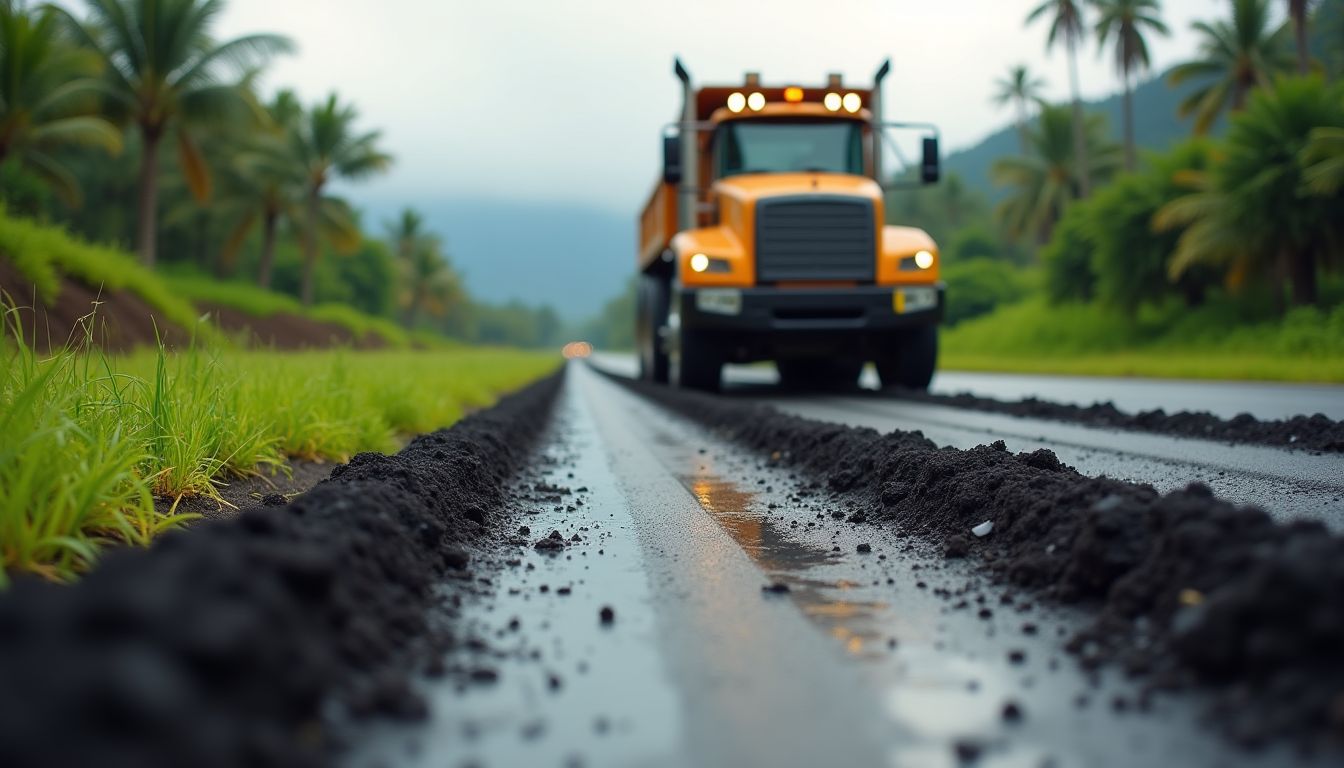
ATLANTA, March 22, 2026 — Researchers from Hawaii have unveiled a pioneering method to convert derelict fishing nets and plastic trash into usable asphalt road material, presenting their findings at the American Chemical Society's Spring 2026 conference. The project, which has already been demonstrated on roads in Oahu, aims to address Hawaii's growing plastic waste crisis while providing a sustainable end-of-life solution for materials that would otherwise pollute the state's surrounding ocean waters. The development represents a significant step forward in both waste management and infrastructure innovation for the island state.
Hawaii faces unique economic and logistical obstacles when it comes to plastic recycling, as the remote island location makes traditional waste processing costly and difficult to execute at scale. Abandoned fishing nets, known as ghost gear, are among the most persistent and damaging forms of marine debris in Hawaiian waters, entangling wildlife and degrading ocean ecosystems for years after their abandonment. Researchers identified these discarded materials as a potential resource rather than a liability, prompting the investigation into their use as road-building components.
The research team found that incorporating recycled plastic and fishing net materials into asphalt mixtures did not significantly compromise the structural integrity of the pavement. Field demonstrations conducted on Oahu showed promising results, with the modified asphalt performing at levels comparable to conventional road surfaces. Scientists noted that the process could provide a scalable, local solution for managing the state's plastic waste without requiring the materials to be shipped off the islands for processing.
The broader environmental implications of the research extend beyond road construction. By diverting plastic waste and marine debris into asphalt production, the method could reduce the volume of material entering or remaining in Hawaii's ocean waters. Researchers indicated that scaling the process statewide could meaningfully reduce the accumulation of marine plastics that currently threaten Hawaiian coral reefs, fisheries, and coastal ecosystems.
The findings were presented at ACS Spring 2026, one of the largest scientific gatherings in the United States, drawing widespread attention from environmental scientists and infrastructure engineers. Researchers indicated they plan to continue refining the asphalt formulation and expanding field testing to assess long-term durability under Hawaii's specific climate conditions. If the method proves viable at larger scales, officials suggest it could serve as a model for other island and coastal communities facing similar plastic waste challenges worldwide.