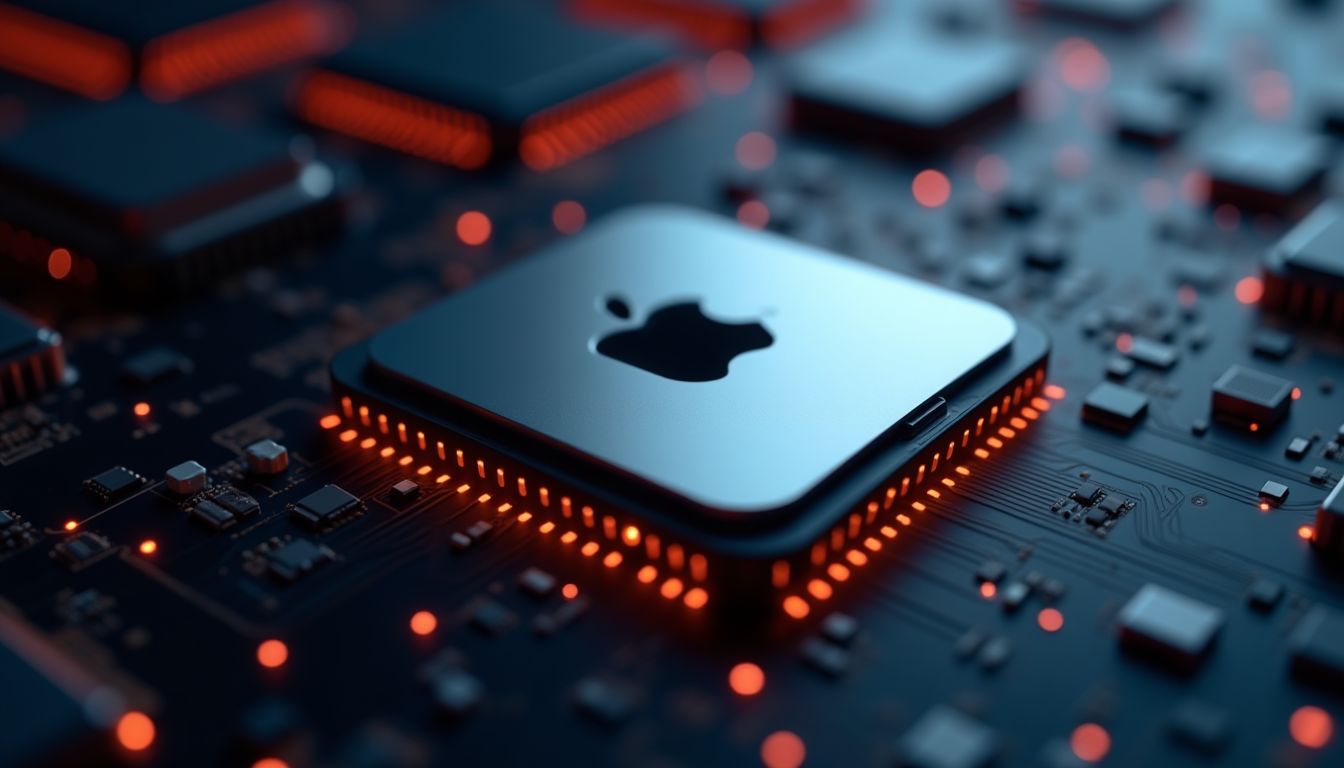
Apple's next-generation M5 Pro and M5 Max processors will feature a new chiplet architecture with dies stacked vertically on top of one another, according to an Apple platform architecture employee.
The new design approach mimics 3D packaging technology and is intended to deliver what the employee described as "unrivaled performance" compared to previous chip generations.
Chiplet Architecture Represents Design Shift
The vertical die stacking represents a departure from traditional flat chip layouts, where components are arranged horizontally across a single plane. This chiplet approach allows multiple processing units to be layered vertically within the same footprint.
3D packaging technology has been utilized by various semiconductor manufacturers to increase processing density while maintaining or reducing the overall size of chips. By stacking components vertically, engineers can fit more transistors and processing elements into a compact space.
M5 Chip Family Development
The M5 Pro and M5 Max would represent the next evolution of Apple's custom silicon lineup, following the current M4 series processors. Apple has not officially announced the M5 chip family or confirmed details about their architecture.
The M-series processors have powered Apple's Mac computers and iPad Pro models since the company began transitioning away from Intel processors in 2020. Each generation has typically included standard, Pro, and Max variants with increasing performance capabilities.
Vertical die stacking could potentially allow Apple to increase processing power and efficiency within the thermal and space constraints of laptop and desktop computer designs. The approach may enable higher transistor counts and improved performance per watt compared to traditional flat chip architectures.